Junkyards typically pay between $100 and $1,500 for cars in 2026, depending on vehicle weight, condition, make and model, and current scrap metal prices. A running midsize sedan brings $300-$700, while full-size trucks can fetch $500-$1,200. The final number comes down to what a yard can sell in parts versus what the metal alone is worth at the crusher.
Last updated: April 2026
At The New Country Auto Parts on Stanley Avenue in Indianapolis, we see this question every single day. Someone calls with a dead car in the driveway and wants a straight answer. The problem is, most articles on this topic give you a vague range and a phone number. We want to show you how the math actually works—from the yard’s side of the counter.
This is the “how the sausage is made” breakdown. We’ll walk through exactly what a salvage yard looks at when a vehicle rolls in (or gets towed in), what drives the offer up or down, and what makes one yard pay $200 while another pays $800 for the same car. If you already know you want to sell your car to a salvage yard, you can skip straight to the pricing table below.
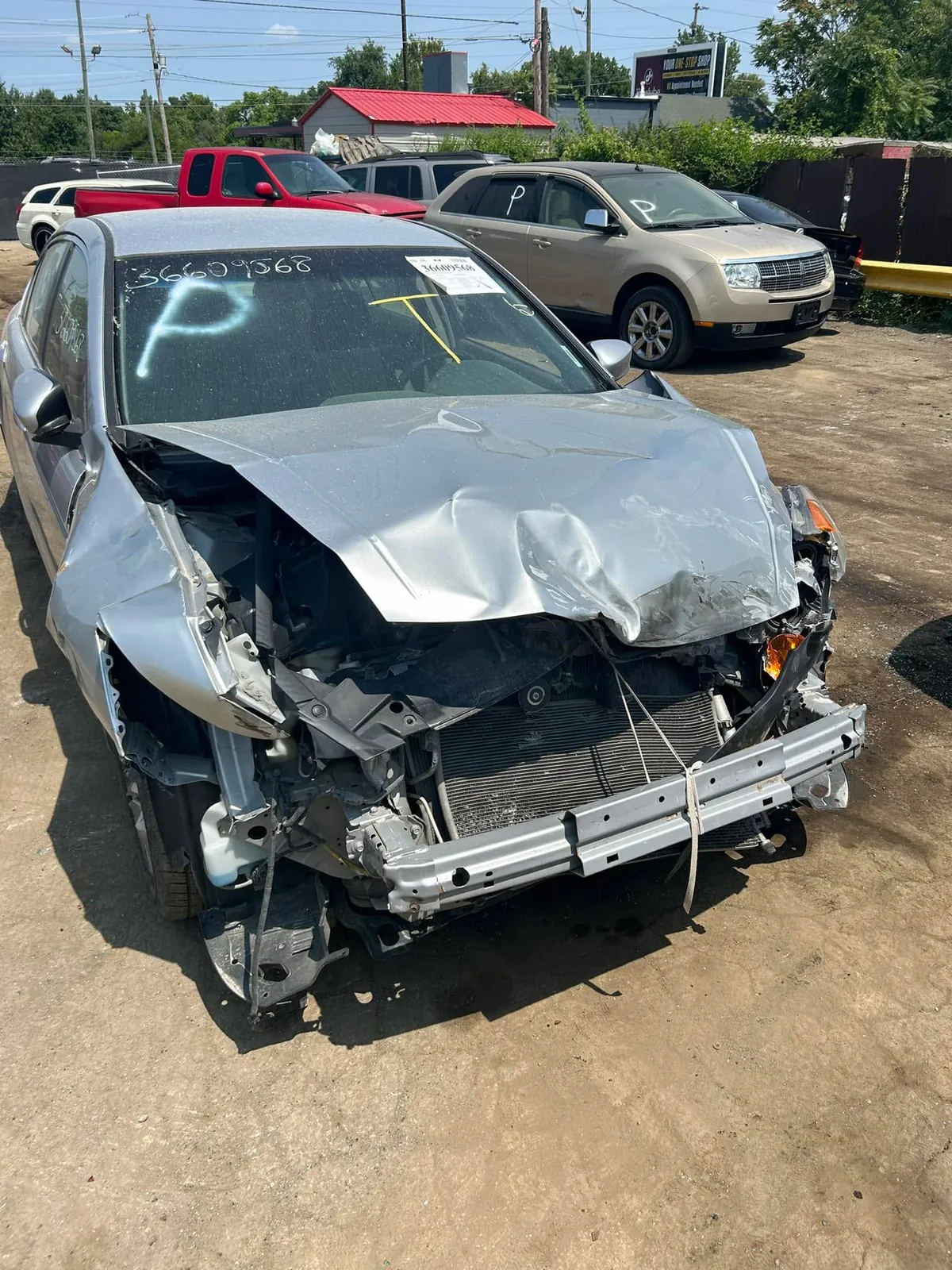
How Much Do Junkyards Pay for Cars in 2026?
Here are the realistic price ranges based on vehicle type and condition. These numbers reflect what yards across Central Indiana and the Midwest are paying right now.
| Vehicle Type | Condition | Typical Payout |
|---|---|---|
| Compact car (Civic, Corolla, Focus) | Non-running | $100-$300 |
| Compact car | Running | $300-$600 |
| Midsize sedan (Camry, Malibu, Fusion) | Non-running | $150-$400 |
| Midsize sedan | Running | $300-$700 |
| Full-size sedan (Impala, Taurus, 300) | Non-running | $200-$500 |
| Full-size sedan | Running | $400-$800 |
| SUV (Explorer, Tahoe, 4Runner) | Any | $300-$1,000 |
| Pickup truck (F-150, Silverado, Ram) | Any | $500-$1,200 |
| Minivan (Caravan, Odyssey, Sienna) | Any | $200-$600 |
| Luxury vehicle (BMW, Mercedes, Lexus) | Any | $600-$1,500 |
| Totaled / severe damage | Not drivable | $150-$500 |
| No title | Any | $100-$300 (20-40% discount) |
Sources: Cash Auto Salvage, 2026; Junk Car Reaper, 2025-2026. Ranges reflect Midwest pricing—Northeast and West Coast markets typically pay 10-25% more (Cash Auto Salvage, 2026).
Why the wide range? Because a junkyard isn’t just buying metal. A parts-focused yard like The New Country Auto Parts evaluates what it can pull and resell before the hull goes to the crusher. That changes everything.
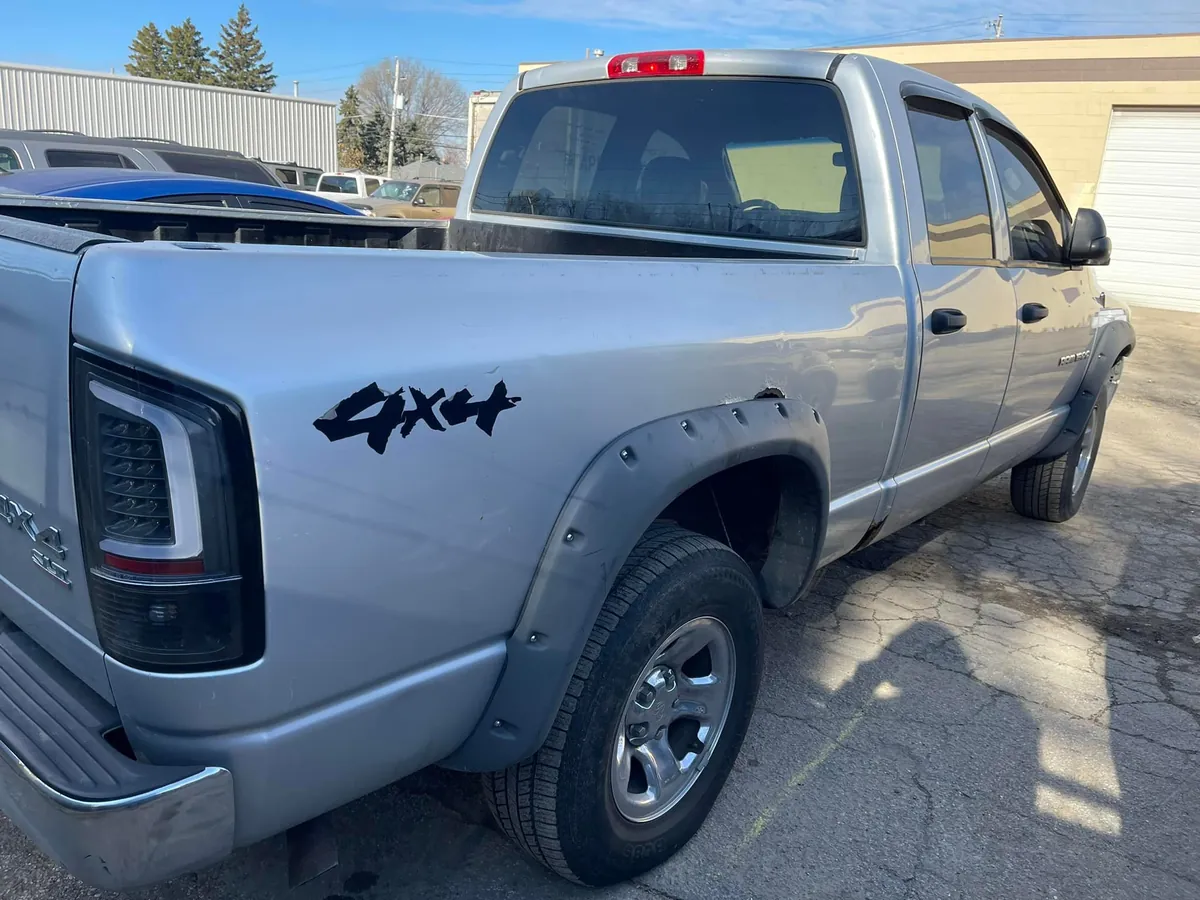
How Does a Salvage Yard Calculate Your Offer?
Every offer a junkyard makes boils down to a simple question: is this car worth more in parts or in scrap metal? The answer determines whether you get $150 or $1,200.
The Scrap Metal Floor Price
The absolute minimum any car is worth is its scrap metal value. Here is the basic formula every yard uses:
- Weigh the vehicle (or estimate—a midsize sedan is roughly 3,000 lbs, a pickup truck is 4,500-5,500 lbs)
- Divide by 2,000 to convert to tons
- Multiply by the current scrap price per ton
Example: A 2012 Chevy Malibu weighing about 3,400 lbs at today’s scrap steel price of roughly $180/ton (Junk Car Reaper, 2026) gives you: 3,400 / 2,000 x $180 = $306 in scrap value. That is the floor. The yard will never offer less than this, because they can always crush it and sell the metal.
Scrap steel prices in 2026 are running $180-$220 per ton (Cash Auto Salvage, 2026), with a January peak near $460 per gross ton before settling back (Sahd Metal Recycling, 2026). These prices move weekly, so your offer today might differ from next month’s.
The Parts Value (Where the Real Money Is)
A scrap-only buyer stops at the metal calculation. A full-service salvage yard goes further. We assess which parts have resale demand and price accordingly. That is why we keep hundreds of vehicles in our yard—the more parts we can pull and sell, the more we can pay for incoming cars.
Here is what individual components typically add to a vehicle’s value:
| Component | Typical Resale Value | Notes |
|---|---|---|
| Engine (running, low miles) | $500-$2,500 | Depends on make, demand, mileage |
| Transmission | $300-$1,500 | Automatic transmissions command higher prices |
| Catalytic converter | $50-$1,500 | Precious metals inside (platinum, palladium, rhodium) |
| Doors (each) | $50-$200 | Color-matched, undamaged doors sell fast |
| Fenders and quarter panels | $30-$150 | Body shops are the primary buyer |
| Alloy wheels (each) | $50-$200 | OEM wheels for popular models are always in demand |
| Headlight assemblies | $50-$300 | Newer LED assemblies bring the most |
| Alternator | $30-$100 | High-turnover item |
| Starter motor | $25-$75 | Consistent demand year-round |
| Radiator | $30-$80 | Aluminum core adds scrap value even if damaged |
Sources: Industry pricing aggregated from Cash Auto Salvage, 2026 and LookUpAPlate Automotive Recycling Statistics, 2026.
A single vehicle with a good engine, intact transmission, and a catalytic converter could be worth $1,500-$4,000 in parts. The yard doesn’t pay you that full amount—they have labor, storage, and overhead—but they will pay significantly more than scrap value if the parts are sellable. Every part we sell comes with a 30-day warranty, which means we need quality inventory, and that means paying fair prices for good vehicles.
Wondering what your car is worth? The New Country Auto Parts pays cash for cars in any condition across Central Indiana. Call (317) 538-4824 for a quote in 10-15 minutes, or visit us at 3013 Stanley Ave, Indianapolis. Get your offer →
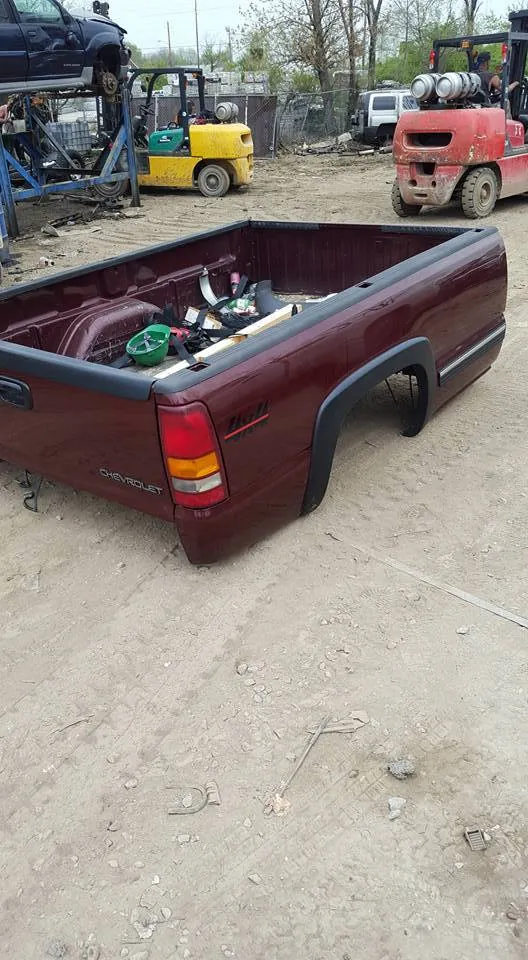
What Factors Affect How Much a Junkyard Pays?
Not all junk cars are created equal. Here are the seven factors that move your offer up or down.
1. Vehicle Weight
Heavier cars are worth more at the baseline level because there is more metal to sell. A Honda Civic (2,800 lbs) will always start lower than a Chevy Silverado (4,800-5,300 lbs). At $180/ton, that weight difference alone accounts for $180 more in scrap value for the truck.
2. Make, Model, and Year
Demand drives pricing. A 2015 Ford F-150 has parts that sell all day long because millions of them are on the road. A 2004 Saab 9-3? Fewer buyers, slower turnover, lower offer. Yards track which parts sit on the shelf and which fly off it.
Popular models with high parts demand in Indianapolis include: Honda Civic and Accord, Toyota Camry and Corolla, Ford F-150, Chevy Silverado, Dodge Ram, and Jeep Grand Cherokee.
3. Running vs. Non-Running Condition
A running vehicle is worth 30-50% more than a non-running one (Junk Car Reaper, 2025). Why? A running engine is a proven engine. The yard can sell it with more confidence, and the buyer gets a part they know works. A non-runner means the yard has to test individual components before pricing them.
4. Catalytic Converter Status
This is the single biggest variable on many vehicles. Catalytic converters contain platinum, palladium, and rhodium—precious metals that fluctuate with commodity markets. A converter from a late-model truck or SUV can add $500-$1,500 to the vehicle’s value (LookUpAPlate, 2026). If yours was stolen (and catalytic converter theft has been rising nationwide), expect the offer to drop accordingly.
5. Title Status
No title means more paperwork, more risk, and a lower offer—typically a 20-40% discount (Junk Car Reaper, 2025). Indiana law requires proper title transfer for vehicle sales. Some yards will work with you on alternative documentation (registration, ID, lien release), but the offer will reflect the added hassle.
6. Current Scrap Metal Prices
Scrap steel prices surged about 20% in 2025 to roughly $185/ton before settling into the $180-$220 range for early 2026 (Junk Car Reaper, 2025-2026). Analysts project steel prices trending from $460/gross ton in January down to $360/gross ton by year-end 2026 (Sahd Metal Recycling, 2026). That means spring and early summer are generally better selling windows than late fall.
Other metals in your car matter too. Aluminum runs $0.65-$0.85/lb, and copper sits at $3.80-$4.20/lb (Cash Auto Salvage, 2026). About 54% of the average vehicle is steel, with smaller but valuable amounts of aluminum, copper, and other metals (LookUpAPlate, 2026).
7. Location and Local Market
Where you live affects what you get paid. Midwest states like Indiana typically track near the national average, while the Northeast pays 15-25% more and Southeast states pay 5-15% less (Cash Auto Salvage, 2026). In Indianapolis, competition among salvage yards keeps prices fair—but it also means you should get quotes from more than one place.
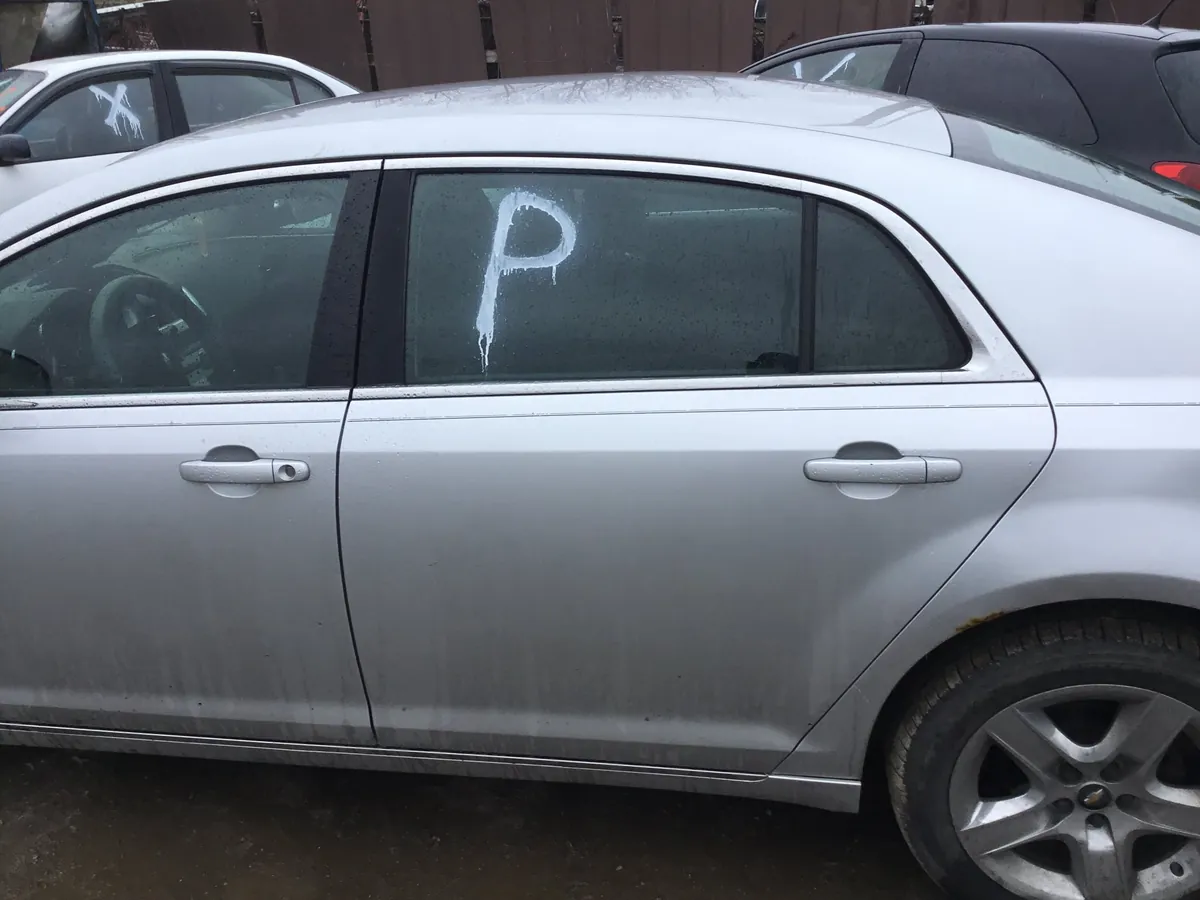
How a Full-Service Yard Values Cars Differently Than a Scrap Buyer
This is the part most articles miss. Not all junkyards operate the same way, and the business model directly determines what they will pay.
A scrap-only buyer calculates your car’s value based on weight and metal prices alone. They crush it, shred it, and sell the raw materials. They are fast and simple, but the offer reflects only the metal floor price.
A full-service salvage yard like The New Country Auto Parts does something different. Before anything gets crushed, the yard evaluates every vehicle for sellable parts. An engine with 80,000 miles on it is worth far more to a shade-tree mechanic than its weight in steel. Same goes for transmissions, doors, headlights, and wheels.
This is why a full-service yard often pays more. The vehicle has more potential value to them because they have the infrastructure—staff, inventory, customers—to extract and sell those parts individually.
At The New Country Auto Parts, the process works like this:
- The vehicle comes in (driven, towed, or picked up with free towing through Cash Car Heroes)
- Staff assess which parts are intact and in demand
- High-value components are pulled and inventoried
- The remaining hull goes to the crusher for scrap metal recycling
- All fluids are drained and hazardous materials are recycled—freon, mercury switches, tires, everything
This vertically integrated approach—buying vehicles, selling parts, recycling scrap—is why the offer can be higher. The yard makes money at multiple stages, so they can afford to pay more upfront.
The auto recycling industry processes roughly 12 million vehicles per year in the United States, with 86% of each vehicle’s material content getting recycled, reused, or recovered for energy (Automotive Recyclers Association, 2025). It is a $25-$32 billion industry nationally (ARA, 2025), and full-service yards are the backbone of it.
Full-service means a better deal. The New Country Auto Parts has part-pullers on staff, a 30-day warranty on all parts sold, and free towing on qualifying vehicles. That infrastructure lets us pay more for your car. See what we offer →
When Is the Best Time to Sell a Junk Car?
Timing matters more than most people think. Two seasonal patterns affect junk car prices:
Scrap metal prices peak in spring. Steel prices typically climb from March through May as construction season drives demand (Sahd Metal Recycling, 2026). A second, smaller bump happens in September and October. If your car is sitting and you are not in a rush, spring is the best window.
Parts demand peaks in summer. Road trip season means more breakdowns, more repairs, and more people looking for affordable used parts. Salvage yards need inventory, so they are more willing to pay up for vehicles with sellable components.
The worst time? Late November through January. Metal prices soften, foot traffic at salvage yards drops, and fewer people are shopping for parts. You will still get an offer, but it might be 10-15% lower than the same car in April.
How to Get the Most Money for Your Junk Car in Indianapolis
A few practical moves can push your offer higher:
- Get at least three quotes. Call The New Country Auto Parts at (317) 538-4824, then call two other yards. Knowing the market gives you bargaining power.
- Have your title ready. No title means an automatic discount. If you have lost it, request a duplicate from the Indiana BMV before you call.
- Be honest about the condition. Yards price based on what you describe. If you say it runs and it does not, the offer gets adjusted on pickup—and you lose credibility.
- Know your catalytic converter status. If yours is intact, mention it. If it was stolen, say so upfront. This single component can swing the offer by hundreds of dollars.
- Do not strip the car first. Removing parts yourself sounds smart, but most people underestimate how much time it takes and overestimate what they will get selling parts individually. A full-service yard can extract more value with less hassle.
- Check current scrap prices. Sites like iScrap App track regional scrap car prices in real time. Knowing the floor price keeps you from accepting a lowball.
Red Flags When Selling to a Junkyard
Most yards are legitimate businesses. But a few warning signs are worth watching for:
- No written offer. If a buyer will not put the price in writing before pickup, walk away.
- Price changes at the door. The classic bait-and-switch: a high quote on the phone, then a lower offer once the tow truck arrives. Reputable yards honor their quotes.
- No business license. Indiana requires salvage yards to be licensed, bonded, and insured. Ask if you are unsure.
- Pressure to decide immediately. A fair offer stands for a few days. Anyone rushing you is worried you will find a better deal.
- Charging for towing. Many yards offer free towing, especially for vehicles with decent parts value. If someone wants to charge you $100-$200 for pickup, factor that into the real offer.
Junk Car Selling Options Compared
Selling to a salvage yard is one of several options. Here is how it stacks up against the alternatives:
| Option | Typical Payout | Speed | Hassle Level | Best For |
|---|---|---|---|---|
| Full-service salvage yard | $200-$1,500 | 1-3 days | Low | Most people—fair price, fast, simple |
| Scrap-only buyer | $100-$500 | Same day | Very low | Cars with no sellable parts left |
| National online buyer | $150-$1,200 | 2-5 days | Low | Convenience, but often middlemen |
| Private sale (as-is) | $500-$3,000+ | Weeks to months | High | Running cars with cosmetic issues |
| Part it out yourself | $1,000-$5,000+ | Weeks to months | Very high | Mechanically skilled with time and space |
| Donate for tax write-off | $0 cash (tax deduction) | 1-2 weeks | Medium | Cars worth under $500 with itemized taxes |
For most people in Indianapolis, a full-service salvage yard hits the sweet spot: a fair price without the headache of listing, negotiating, or waiting weeks for a buyer. If you are still on the fence about whether to sell, fix, or keep driving, stop by our yard and talk to someone in person—no pressure, no commitment.
Ready to sell? The New Country Auto Parts buys cars, trucks, vans, and SUVs in any condition. Free towing across Central Indiana. Quote in 10-15 minutes. Call (317) 538-4824 or get your offer online →
Frequently Asked Questions
How much is the average junk car worth in scrap?
The average junk car weighs about 3,000-3,500 pounds. At current scrap steel prices of $180-$220 per ton (Cash Auto Salvage, 2026), that puts the raw scrap value at roughly $270-$385. The national average payout for a scrap vehicle is around $646 (LookUpAPlate, 2026), since most yards factor in parts value too.
Do junkyards pay more for trucks than cars?
Yes. Trucks weigh more (4,500-5,500 lbs vs. 2,800-3,500 lbs for sedans), so the scrap metal floor is higher. Truck parts also tend to be in stronger demand—especially for popular models like the Ford F-150 and Chevy Silverado. Expect $500-$1,200 for a truck compared to $200-$700 for a comparable sedan (Junk Car Reaper, 2025).
Can I sell a junk car without a title in Indiana?
Some yards will buy a car without a title, but expect a 20-40% reduction in the offer. You will likely need your Indiana registration, a valid photo ID, and sometimes a lien release. The hassle and legal risk for the yard is real, and the discount reflects that. Getting a duplicate title from the Indiana BMV before selling is almost always worth it.
Will a junkyard tow my car for free?
Many full-service yards offer free towing, especially for vehicles with decent parts value. At The New Country Auto Parts, free towing is available through Cash Car Heroes for qualifying vehicles across Central Indiana. Always ask—if a yard charges $100-$200 for towing, subtract that from their offer when comparing quotes.
Should I remove parts before selling to a junkyard?
Usually not. The time and effort to pull, list, and sell parts individually rarely pays off unless you are a mechanic with the tools and space. A full-service salvage yard with part-pullers on staff can extract and sell components more efficiently than most car owners. Sell the car whole and let the yard do the work.
How do scrap metal prices affect my junk car offer?
Scrap steel prices directly set the floor for your offer. When steel rises (as it did in early 2026, hitting $460/gross ton in January), junk car payouts rise too. When steel drops, offers soften. The relationship is not dollar-for-dollar, but a 10% move in steel typically means a 5-8% move in junk car offers. Check current prices at iScrap App before calling.
What is the most valuable part on a junk car?
The catalytic converter is often the single most valuable component, worth $50-$1,500 depending on the vehicle (LookUpAPlate, 2026). After that, the engine ($500-$2,500) and transmission ($300-$1,500) carry the most value. A car with all three intact will always command a higher offer than one that has been picked over.
How fast can I get paid for my junk car?
At most salvage yards, you can get a quote within minutes and schedule pickup within 24-48 hours. Payment is typically cash or check on the spot when the vehicle is picked up. At The New Country Auto Parts, quotes come in 10-15 minutes and payment happens at pickup—no waiting for a check in the mail.