Junk your car when a repair costs more than half the vehicle’s value, when the damage is structural (frame rust, a bent unibody, flood damage), or when several major systems fail at once. But run that repair math twice — once with new-part prices and once with used salvage parts — because the second answer is often “fix it.”
Last updated: July 2026
Knowing when to junk a car is mostly arithmetic, and the arithmetic has a flaw nobody talks about: every “should I junk my car” guide online assumes you are paying new-part prices. We see the other side of that math every day at The New Country Auto Parts in Indianapolis. A car comes in on a flatbed, “dead,” and the thing that killed it is a $200 used part.
So here is the honest decision guide. Yes, we sell used parts, so we have a horse in this race. But we also buy junk cars, so we win either way — which frees us up to just tell you the truth about which cars are worth saving.
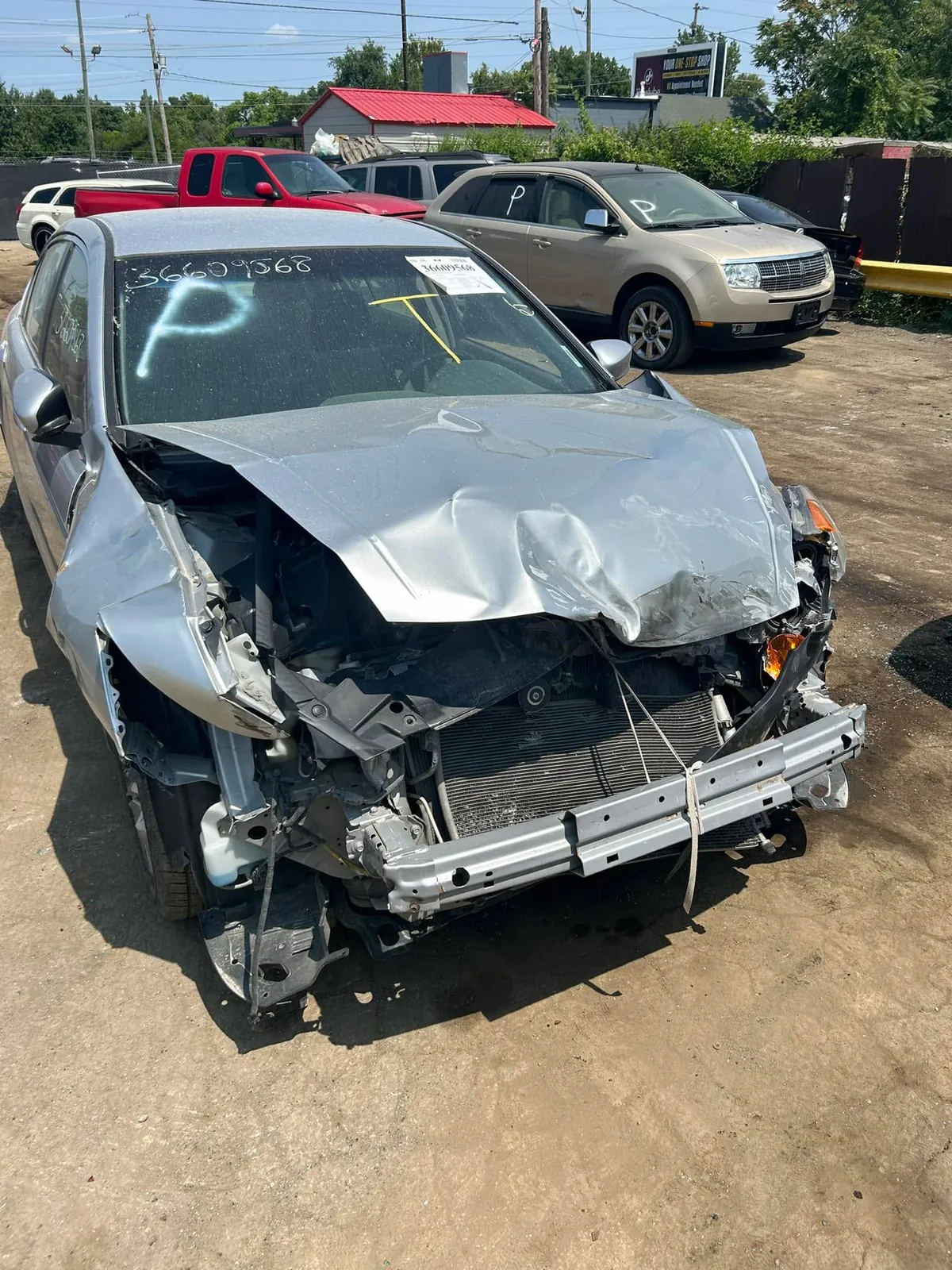
When Should You Junk a Car? The 50% Rule
The standard test is the 50% rule: if a repair estimate exceeds 50% of your car’s current market value, the car is not worth fixing. Insurance companies use a version of the same logic when they total a vehicle after a crash.
Running the rule takes two numbers and one division:
- Look up your car’s private-party value in fair condition on Kelley Blue Book.
- Get a written repair estimate from a shop.
- Divide the repair cost by the car’s value. Over 50%, the conventional advice says junk it.
Say your 2011 Impala is worth $3,000 and the shop quotes $2,800 for a transmission. That is 93% of the car’s value. Every guide on the internet says the same thing at that point: scrap it.
And to be fair, the rule exists for a reason. Repairs are not cheap and they are not getting cheaper. The average car repair bill in the US runs about $838 (Kelley Blue Book, 2025), and AAA puts routine maintenance, repair, and tire costs at 11.04 cents per mile for a new vehicle (AAA, 2025). A car that keeps generating four-figure estimates can bleed you dry slowly.
But the rule has a blind spot, and it is a big one.
The Catch: The 50% Rule Assumes New-Part Prices
Here is what the calculators leave out: the repair estimate in your hand is almost always priced with a new or remanufactured part. Price the same repair with a used salvage part and the math can flip completely.
Recycled parts generally run about half the price of new OEM replacement parts (Ontario Automotive Recyclers Association, 2026) — and on big-ticket items the gap is much wider than half. These are the ranges we see at our own parts counter, pulled from our used auto parts price guide:
| Part | New or remanufactured | Used salvage part |
|---|---|---|
| Engine (complete) | $2,500 – $12,000 | $300 – $2,500 |
| Transmission | $1,300 – $3,400+ | $150 – $1,500 |
| Alternator | $300 – $750 | $30 – $100 |
| Starter | $80 – $350 | $25 – $80 |
Labor is roughly the same whether the shop installs a new unit or a used one. The part price difference is pure savings.
Now re-run that Impala. Car value: $3,000. A used transmission for a common GM sedan: a few hundred dollars, not $2,800. Even with installation, the job can land under a third of the car’s value. The same car that failed the 50% rule at new-part prices passes it comfortably with a used part. That is not a loophole — it is the same rule with better inputs.
There is a reason this matters more now than it did ten years ago. The average vehicle on American roads is 12.8 years old, and passenger cars average 14.5 years (S&P Global Mobility, 2025). According to Todd Campau, Aftermarket Practice Lead at S&P Global Mobility, “The vehicle fleet continues to demonstrate impressive resilience even as it faces stress from high new and used prices and economic uncertainty.” Translation: people are keeping older cars running because replacing them is expensive. Used parts are how you do that without losing the math.
Price the part before you junk the car. The New Country Auto Parts stocks hundreds of vehicles, all makes and models, with fresh inventory added daily. Call (317) 787-7555 with your year, make, and model and we’ll tell you if the part that killed your car is sitting in our yard. Get a part quote →
Is It Worth Fixing My Car? 7 Expensive Repairs, Two Ways
These are the seven repairs that most often push a car to the junkyard. For each one: the conventional math, the used-parts math, and our honest verdict.

1. Transmission Failure
The classic car-killer. A remanufactured transmission runs $1,300 to $3,400 before labor, which is why so many otherwise-fine cars get scrapped over it. A used transmission from a salvage yard runs $150 to $1,500 depending on the vehicle. Verdict: price a used unit before you decide. Our used transmission buying guide shows exactly what to check before you buy one. For common cars and trucks, this repair usually passes the 50% rule with a salvage part.
2. Blown Engine
Same story, bigger numbers. New crate engines can run $4,000 to $12,000 and remanufactured units $2,500 to $5,500. A used engine runs $300 for a common four-cylinder up to $2,500 for a low-mileage V8. Get the engine code, match it, and a “dead” car often comes back for a fraction of its value — our used engine buying guide shows exactly what to check first. Verdict: fix it with a used engine, unless the car has other major problems stacking up.
3. Head Gasket on a High-Mileage Engine
Head gasket jobs are labor-heavy: hours of teardown, machine-shop work, and the risk of finding a warped head halfway through. On a high-mileage engine, we will say the quiet part: it is often cheaper and safer to drop in a complete used engine with decent mileage than to open up the old one. Verdict: depends — compare the gasket quote against a used engine swap before committing.
4. Frame or Structural Rust
Here is where we stop trying to save your car. Frame rot and unibody rust are not parts problems — the skeleton of the vehicle is failing, and no salvage part fixes that. Repairs involve cutting and welding structural steel, they rarely hold long-term, and the car is unsafe in a crash meanwhile. Verdict: junk it. No exceptions worth arguing.
5. Flood Damage
A flooded car is a slot machine that only pays out repair bills. Water wicks into wiring harnesses, connectors, and modules, and the corrosion failures show up one at a time for years. Insurance companies total flood cars for a reason. Verdict: junk it, even if it starts today.

6. Collision Damage (Non-Structural)
A caved-in door, a crushed fender, a smashed headlight assembly: expensive at body-shop prices, cheap in used parts. Doors, hoods, bumpers, and lights are exactly what salvage yards carry most of, often in your car’s factory color. If the frame is straight, body damage is one of the best cases for fixing a car with used parts. Verdict: fix it.
7. The Death-by-a-Thousand-Cuts Car
Alternator last month, starter this month, AC compressor next. If each fix is a $30 to $100 used part, a nickel-and-dime car can stay cheap to run for years. The line to watch: when multiple big-ticket systems — engine, transmission, suspension — start failing in the same season, the car is telling you something. Verdict: keep fixing with cheap used parts until the failures get big and simultaneous. Then junk it.
Not sure what the part costs used? Browse what The New Country Auto Parts pulls every day — engines, transmissions, body panels, electrical — all backed by a 30-day warranty. See our used parts →
Repair vs. Junk Car: How to Run the Numbers
Five minutes with a phone gets you a real answer instead of a gut feeling:
- Rule out the automatic junkers first. Structural rust, bent frame, flood history — if any of these apply, stop here and junk it.
- Look up your car’s value. Private-party, fair condition. Write the number down.
- Get the repair diagnosed. You need to know the actual failed part, not just the symptom.
- Price the used part. Call a salvage yard with your year, make, model, and engine or transmission code. In Indianapolis, that call is (317) 787-7555.
- Re-run the 50% rule with the used-part total. Part plus labor, divided by car value. Under 50% and the car is otherwise sound? Fix it. Over 50%, or failures are stacking? Junk it.
One honest caveat: this framework works best on common vehicles with healthy donor supply — your Silverados, Camrys, Fusions, Civics. If you drive something rare or European, used-part availability gets thinner and the math tightens. Call first; it costs nothing to ask.
When Should You Just Junk It?
Some cars are done, and pretending otherwise wastes your money. Junk the car when the damage is structural or flood-related, when the used-parts math still fails the 50% rule, or when you simply do not trust it anymore — a car you are afraid to drive has a value of zero to you no matter what the book says.
The consolation prize is real money. Junkyards typically pay $100 to $1,500 for end-of-life cars depending on weight, condition, and parts demand, and you have more selling options than most people think. Our sister company Cash Car Heroes buys junk cars, trucks, vans, and SUVs in any condition across Central Indiana — quote in 10 to 15 minutes between 8am and 8pm, cash or check on the spot, free towing included. Fittingly, some of those cars end up in our yard as donor vehicles, saving somebody else’s ride.
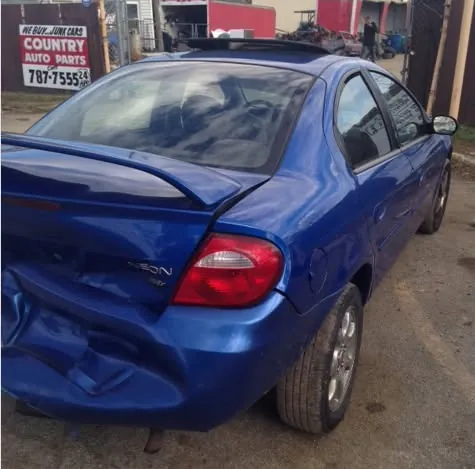
Either way, the car should not rot in your driveway while you decide. Indiana heat and winters are not kind to a parked vehicle, and its value only goes down.
Fix it or junk it — we handle both. The New Country Auto Parts sells the used part that might save your car, and pays cash if it truly is done. One yard, one call: (317) 787-7555, or stop by 3013 Stanley Ave on the south side of Indianapolis. Get a cash offer →
Frequently Asked Questions
When should I junk my car instead of fixing it?
Junk your car when repairs exceed 50% of its value even at used-part prices, when damage is structural (frame rust, bent unibody, flood damage), or when several major systems fail at once. If the failure is a single replaceable component like an engine, transmission, or alternator, price a used part first — it often changes the answer.
What is the 50% rule for car repairs?
The 50% rule says a repair is not worth doing if it costs more than half the car’s current market value. Look up your car’s private-party value, divide the repair quote by that number, and compare. The catch: most quotes assume new parts. Recalculate with a used salvage part before applying the rule, since used parts often cost 50% to 80% less.
Is it worth fixing a car with over 200,000 miles?
Sometimes. Mileage alone does not junk a car — the average US vehicle is now 12.8 years old (S&P Global Mobility, 2025). A 200,000-mile truck with a solid frame and one failed part can be worth fixing with a $300 used part. The same mileage with rust, a tired engine, and stacking repairs is a junk candidate. Judge the whole car, not the odometer.
How much cheaper are used auto parts than new ones?
Used salvage parts typically run about half the price of new OEM parts, and the gap widens on big-ticket items. At an Indianapolis salvage yard, a used engine runs $300 to $2,500 versus $4,000 to $12,000 new, and a used transmission runs $150 to $1,500 versus $1,300 to $3,400 remanufactured. Labor costs stay roughly the same either way.
What repairs mean a car is never worth fixing?
Structural frame rust and flood damage. Frame rot means the vehicle’s skeleton is failing, which no replacement part fixes, and repairs rarely hold. Flood cars develop electrical corrosion failures for years after the water recedes. Both make a car unsafe and financially bottomless, which is why insurers total them. Junk these regardless of what the rest of the car looks like.
How much money do you get for junking a car?
Junkyards typically pay $100 to $1,500 depending on the vehicle’s weight, condition, completeness, and parts demand. Running vehicles and full-size trucks land at the higher end. In Central Indiana, Cash Car Heroes quotes junk cars in 10 to 15 minutes between 8am and 8pm and pays cash or check on the spot, with free towing included.
Do used engines and transmissions come with a warranty?
At a full-service yard, yes. The New Country Auto Parts backs parts with a 30-day warranty unless sold as-is: a defective part is replaced with the same part, or store credit for what you paid if it is no longer in stock. Transport and installation are the customer’s responsibility. Core charges apply on engines and transmissions and are refunded when you return the old unit within 5 days.
Still on the fence? Visit the yard at 3013 Stanley Ave, Indianapolis — Monday through Friday 8am to 5pm, Saturday 9am to 2pm — and talk it through with someone who prices this decision every day. No pressure either way. The car is either worth saving or worth cash, and five minutes tells you which.