Yes — most junkyard parts are reliable. Salvage yard vehicles mostly arrive because of collisions and insurance total losses, not because something broke, and a used OEM part was built by the same manufacturer to the same spec as the new version. Buy the right categories, inspect the big-ticket items, and let a warranty cover the rest.
Last updated: September 2026
We’ve been selling used parts at The New Country Auto Parts since 2015, and “will this thing actually work?” is still the question behind half the phone calls we take. Fair question. Nobody wants to spend a Saturday installing an alternator that’s deader than the car it came off of.
So here’s the honest version, from a decade of watching which parts come back and which never do. Not “everything in a junkyard is gold” — it isn’t. And not “never buy used” either, because that advice quietly costs Indianapolis drivers thousands of dollars a year. The truth sits in the middle, and it’s very learnable.
Where Do Junkyard Parts Actually Come From?
The biggest misconception about junkyard parts quality is where the cars come from. People picture a vehicle that wheezed its way to the scrapyard after every component gave out at once. Some arrive that way. Most don’t.
A large share of salvage inventory is collision and total-loss vehicles — cars that stopped being worth fixing, not cars that stopped running. Roughly one in ten collision claims on newer gas-powered vehicles in the U.S. now ends with the insurer declaring the car a total loss (Mitchell, 2024). And because used car prices dropped more than 7% year over year in summer 2024 (CarGurus data, cited by Mitchell, 2024), it takes less damage than ever to total a car: when the vehicle is worth less, the repair math tips sooner.
Think about what that means for the parts. A car gets rear-ended hard enough to total it, and the engine, transmission, mirrors, seats, and every panel on the front half are exactly as good as they were the day before the crash.
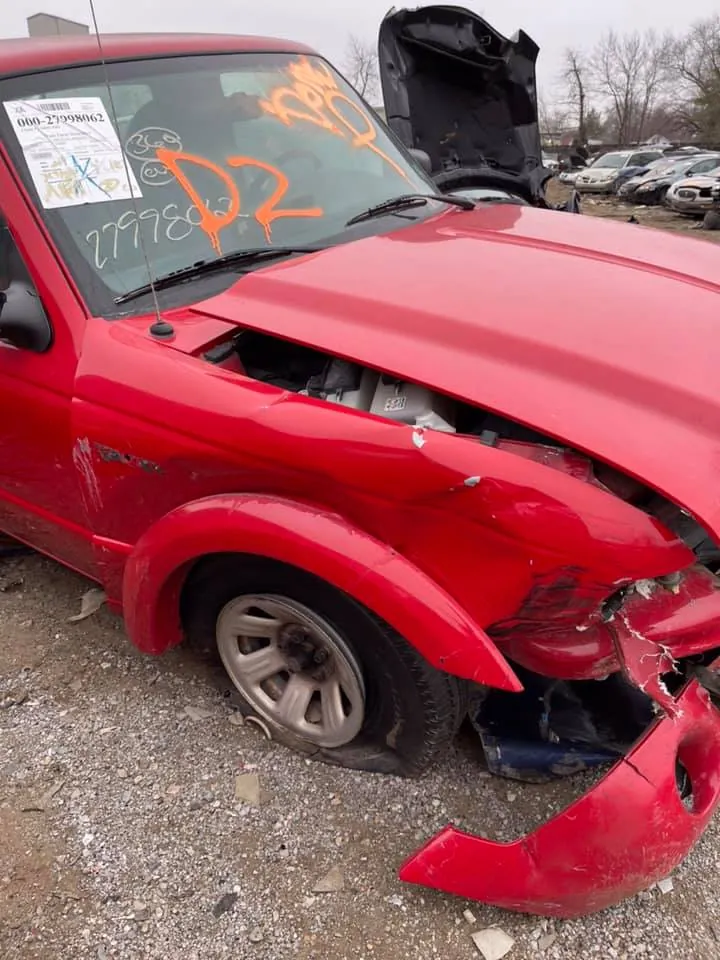
Our own yard works the same way. Vehicles come in from insurance companies, tow companies, auctions, private sellers — and from Cash Car Heroes, our sister company, which pays cash for junk cars with free towing across Central Indiana. Plenty of those cars drive onto the lot under their own power. Their parts aren’t junk; their owners just moved on.
Meanwhile, the average American vehicle is now 12.8 years old (S&P Global Mobility, 2025). Millions of drivers are keeping cars that dealers stopped stocking parts for years ago. For those vehicles, a salvage yard isn’t the risky option — it’s often the only place the part still exists.
Are Used OEM Parts the Same Quality as New Ones?
Here’s the part of the argument most people miss: a used part from a salvage yard usually isn’t an imitation of the factory part. It is the factory part. The Automotive Recyclers Association calls these recycled original equipment — parts built by the same manufacturer, to the same specifications, as what your car rolled off the line with. The only difference is miles.
This is a big industry, not a fringe one. Auto recyclers process more than 4 million vehicles a year in the U.S. and Canada (Automotive Recyclers Association), over 500,000 recycled OEM parts are sold every day (ARA statement via Auto Recycling World, 2021), and the trade group puts the savings at 20% to 80% off the price of new (ARA). Nobody moves half a million parts a day from a source that doesn’t work.
Michael Swift, then president of the Automotive Recyclers Association, put it plainly in a 2016 interview with B&R Autowrecking: “The misconception is that junkyard parts are just junk, and no one takes the time to inspect them. That misconception is just wrong.”
If you’re weighing used OEM against a cheap aftermarket part, our OEM vs. aftermarket vs. used salvage comparison walks through when each one makes sense.
Junkyard Parts Quality by Category: Trust, Inspect, or Skip
Ten years in, our strongest opinion is this: reliability isn’t about the yard, it’s about the part category. Some parts are nearly impossible to get burned on. Some deserve a hard look first. And some we’ll flat-out tell you not to buy used, even though we sell parts for a living.
| Category | Risk buying used | Examples |
|---|---|---|
| Buy with confidence | Very low — these either fit or they don’t, and you can see their condition | Body panels, doors, mirrors, glass, seats, interior trim, wheels, bumpers, tailgates |
| Inspect before buying | Moderate — condition depends on the donor car’s history and miles | Engines, transmissions, alternators, starters, axles, radiators, electronics |
| Skip used entirely | High — wear items and single-use safety parts | Brake pads and rotors, tires, belts, hoses, filters, airbags, seatbelts |
The first category is why body shops live at salvage yards. A door is steel and hinges. A mirror either adjusts or it doesn’t. There’s no hidden wear to gamble on — what you see is what you bolt on.
The third category is where the “never buy used” crowd has a point, and we agree with them. Brake pads arrive half worn. Rubber ages whether it’s driven or not. Airbags and seatbelts are single-use safety equipment and should always be bought new. We keep a full list, with the reasoning, in our guide to car parts you should never buy used.
Everything interesting happens in the middle category — so let’s talk about how to inspect.
How Do You Tell a Good Used Part From a Bad One?
For mechanical parts, junkyard reliability is mostly a homework problem. Four things separate the buyers who win from the ones who get burned:
- Look at the donor vehicle, not just the part. This is the underrated advantage of buying from a yard instead of a shipped online listing. Collision damage at one corner with a clean engine bay tells you the drivetrain led a normal life. Check for a milky oil cap, burnt fluid, or rust in places rain doesn’t explain.
- Ask what the yard knows about it. Mileage on the donor, how it arrived, how long it’s been on the lot. An honest yard will tell you what it knows and admit what it doesn’t.
- Match the fitment exactly. Year, make, model, trim, and for electrical parts the exact option package. In our experience, wrong-fitment purchases get blamed on “bad junkyard parts” far more often than actual bad parts do. Our used auto parts buying guide covers how to confirm a match before you pay.
- Spend the most care on the most expensive parts. An engine or transmission deserves twenty minutes of checks, not two. We’ve written step-by-step inspection guides for both: the used engine buying guide and the used transmission buying guide.
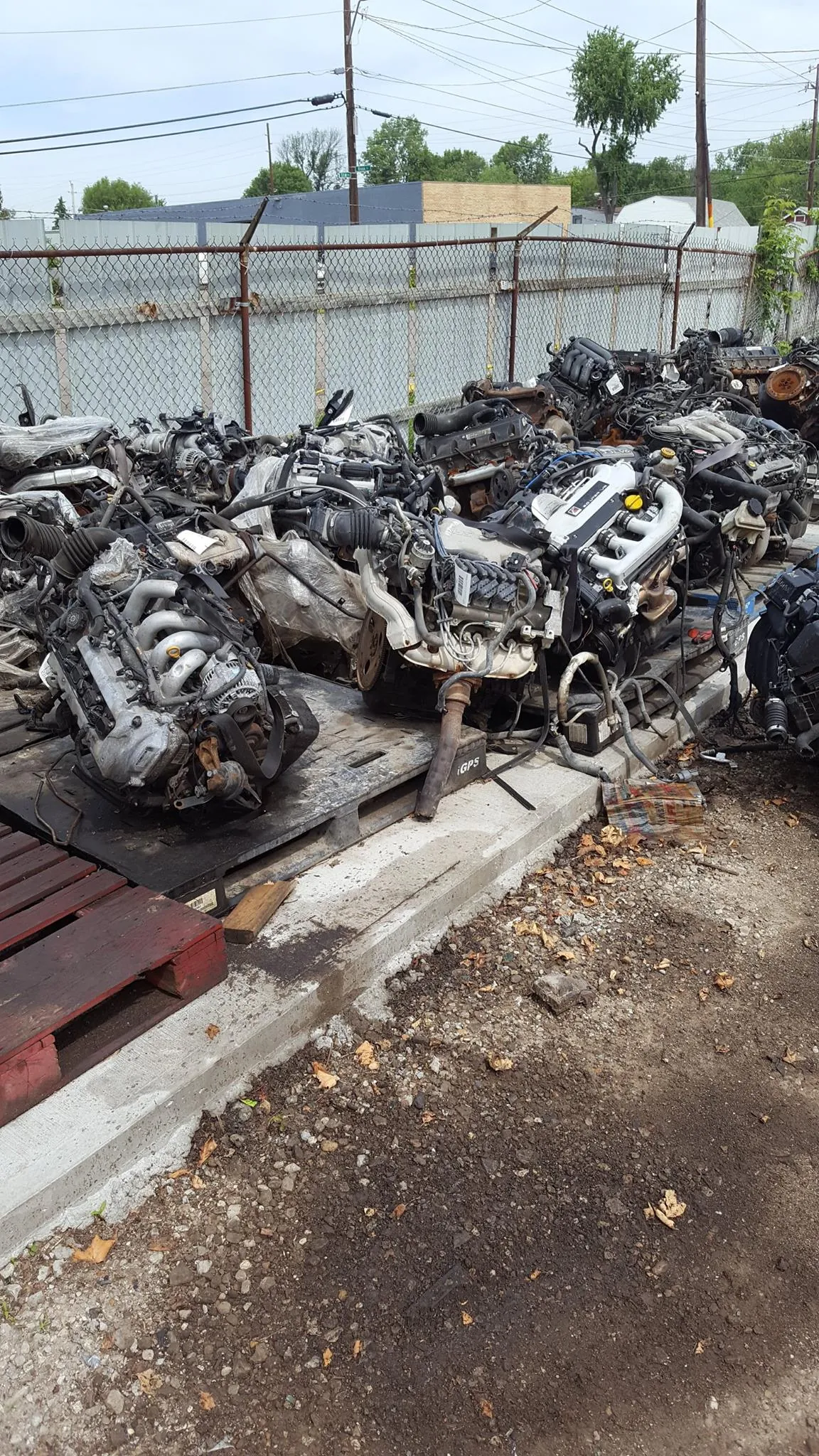
Are junkyard engines reliable? They can be — the engine in a totaled car is usually fine — but this is the one purchase where you should never skip the inspection, because you can’t fully test a motor until it’s installed. That’s exactly the gap a warranty exists to cover.
Not sure about a part? Call (317) 787-7555 with your year, make, and model — we’ll tell you what’s in the yard, what we know about the donor car, and quote the price while you’re on the phone. See how our used parts work →
How Does a 30-Day Warranty Protect You on Used Parts?
No inspection catches everything. We’ve sold parts that looked perfect and failed in a week — not many, but pretending it never happens is how yards earn the junk reputation. The honest answer to that risk isn’t a promise that every part is flawless. It’s a warranty.
At The New Country Auto Parts, parts carry a 30-day warranty unless sold as-is. Here’s what that means in practice, with no fine-print surprises:
- If a part is defective, we replace it with the same part — or give you store credit for what you paid if we no longer have one in stock.
- As-is parts are excluded. They’re marked that way at purchase, priced accordingly, and not returnable. Know which one you’re buying before you pay.
- The warranty covers the part, not the labor. Installation and getting the vehicle to us are on you. If a shop is doing your install, factor that in when you decide between used and new.
- Some parts carry a refundable core charge, and engines and transmissions require proof of an oil change every 3,000 miles or 3 months to keep coverage.
That’s an ordinary salvage-yard warranty, and we’d rather describe it accurately than oversell it. The point is simple: on a warrantied part, “what if it’s bad?” has a defined answer that doesn’t involve eating the cost.
What 10 Years of Selling Used Parts Taught Us
The New Country Auto Parts opened at 3013 Stanley Ave in 2015 as Indy’s newest full-service salvage yard. A decade of pulling, selling, and warrantying parts on the south side of Indianapolis has settled a few arguments for us:
- The part’s story beats the part’s age. A 15-year-old mirror from a rust-free donor is a better buy than a 5-year-old transmission from a car that clearly skipped every oil change. History over years, every time.
- Most “bad part” complaints aren’t bad parts. They’re fitment misses — the right part for the wrong trim. It’s why we’d rather spend five extra minutes on the phone confirming your build than process an exchange later.
- Professional pulling matters. A part is only as good as its removal. Our part-pullers take parts off donor cars without the pried tabs and cut harnesses that doom a careless pull — or you can pull it yourself and ask the front desk about the self-pull discount. The trade-offs between those models get a full breakdown in our self-service vs. full-service comparison.
- Prep work prevents surprises. Every vehicle is drained of fluids and cleared of hazardous materials before it’s placed in the yard, and inventory is grouped by make and model with fresh vehicles added daily.
- Honesty is the whole business model. We tell customers not to buy brake pads from us. We point out as-is tags. Indianapolis drivers have rated that approach 4.8 stars across 320+ Google reviews.

One thing we won’t claim: that a used part is the right call every single time. If your car needs a new-only safety part, buy new. If a shop’s labor cost to install an unwarrantied gamble twice would erase the savings, run that math first. Used parts win most of the time — not all of the time — and knowing the difference is the actual skill.
Want to see the yard for yourself? We’re at 3013 Stanley Ave on the south side of Indianapolis, near Madison and Troy — Monday–Friday 8–5, Saturday 9–2. Plan your visit →
Frequently Asked Questions
Are junkyard parts reliable?
Most are, because most salvage vehicles arrive from collisions and insurance total losses rather than mechanical failure — their unaffected parts are original OEM equipment in normal working condition. Reliability depends on category: body panels, glass, and interior parts are very safe used, while engines and transmissions should be inspected first and bought with a warranty.
Which junkyard parts are safest to buy used?
Parts whose condition you can see: body panels, doors, bumpers, mirrors, glass, wheels, seats, and interior trim. They have no hidden wear — they fit and function, or they visibly don’t. That’s why body shops buy heavily from salvage yards. Solid mechanical parts like alternators and starters are also good buys when the yard backs them with a warranty.
What parts should you never buy from a junkyard?
Wear items and single-use safety parts. Brake pads and rotors, tires, belts, hoses, and filters arrive already partly used up, and rubber degrades with age even when it isn’t driven. Airbags and seatbelts are single-use safety devices that should always be purchased new. A fair price on any of these used is still a bad deal.
Are junkyard engines reliable?
Often, yes — an engine from a rear-ended or totaled car is usually as healthy as it was before the crash. But engines are the one purchase to slow down on: check the oil cap for milkiness, look at the donor car’s overall condition, ask about mileage, and buy where a 30-day warranty applies. Skip engines from donors with fire or flood damage.
Do junkyard parts come with a warranty?
Policies vary by yard, so always ask. At The New Country Auto Parts in Indianapolis, parts carry a 30-day warranty unless sold as-is: defective parts are replaced, or you get store credit for what you paid if the part is no longer in stock. The warranty covers the part itself — installation and transportation are the customer’s responsibility.
How much cheaper are junkyard parts than new ones?
Recycled OEM parts typically cost 20% to 80% less than comparable new parts (Automotive Recyclers Association). The gap is widest on dealer-only and discontinued items, where the new version is either very expensive or no longer made. More than 500,000 recycled OEM parts sell every day (ARA, 2021), so the supply is deep enough that price, not availability, usually decides.
The Bottom Line
“Are junkyard parts reliable?” was never really one question. Body panels, glass, and interior parts: reliably yes. Engines and transmissions: yes with homework and a warranty. Brake pads and airbags: no, and any yard that says otherwise is selling you something.
Ten years at the counter taught us that the customers who treat used parts as a skill — match the fitment, read the donor car, respect the skip-list — save real money year after year. The New Country Auto Parts stocks hundreds of vehicles, all makes and models, with part-pullers on staff and fresh inventory daily. Search our inventory online, plan a visit, or call (317) 787-7555 and tell us what you need — and if it’s a part we wouldn’t buy used ourselves, we’ll say so. Questions before you come by? Get in touch.