Learning how to pull parts from a junkyard comes down to five steps: call ahead to confirm the yard has your vehicle, dress for the conditions (closed-toe shoes, old clothes, gloves), bring a basic socket set, photograph the part before you touch a bolt, and take every bracket, bolt, and connector that comes with it. Do those five things and your first pull will go fine.
Last updated: July 2026
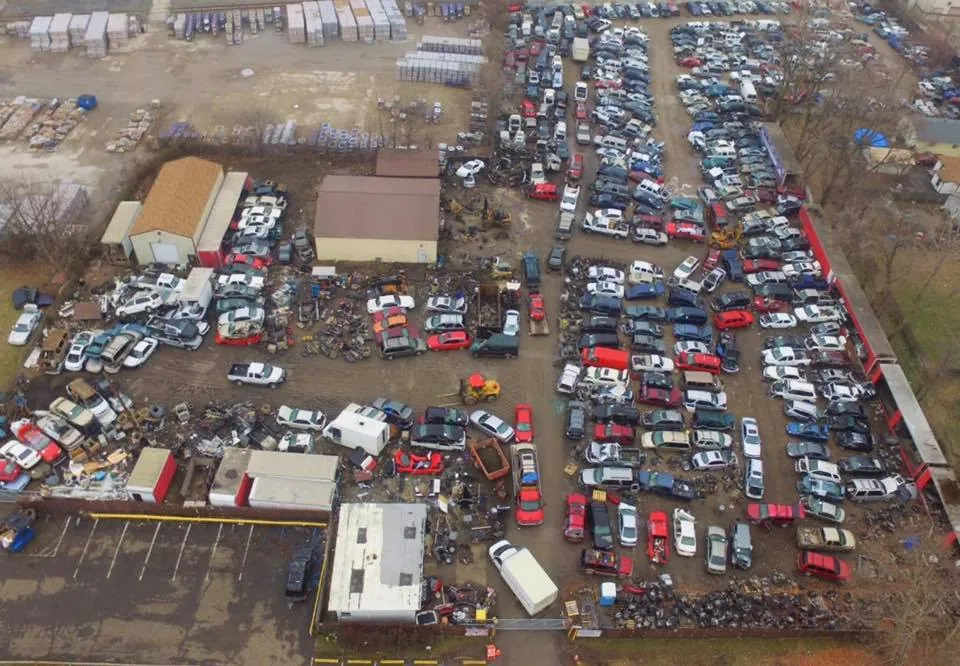
We run The New Country Auto Parts, a full-service salvage yard at 3013 Stanley Avenue on the south side of Indianapolis, and we watch parts come off cars every single day. Fair warning up front: at our yard, part-pullers on staff do the heavy work for you — that’s the whole point of a full-service yard. But plenty of people in Central Indiana wrench at self-service yards too, and the skills below apply anywhere there’s a lot full of donor cars. Here’s the complete beginner’s playbook, plus the honest case for skipping the work entirely.
What Should You Do Before Going to the Junkyard?
The pull itself is usually the easy part. The trips that go sideways are the ones where somebody drives across town for a car that isn’t there or a part that doesn’t fit. Thirty minutes of prep prevents both.
- Call ahead. Inventory at a salvage yard changes daily — at our yard, fresh vehicles hit the lot constantly from auctions, insurance companies, and direct purchases. There’s no substitute for calling (317) 787-7555 and asking whether a matching vehicle is on the lot right now.
- Know your exact part, not just the part name. “Alternator for a 2012 Malibu” is a start. The engine size, trim, and even build date can change which unit fits. Pull the part number off your old unit if you can.
- Learn the interchange. The same alternator, mirror, or tail light often fits several models across several years. Ask the counter which other vehicles share your part — it can triple the number of donor cars you can pull from.
- Remove the old part at home first. This is the single best beginner trick. It tells you exactly which tools the job takes, which bolts are hidden, and how long it runs — with a garage floor and good lighting instead of gravel and sun.
- Check the price before you drive. Most yards price by part type, not by car. Ours are nothing fancier than a phone call away, and our used auto parts price guide shows what common parts should run.
What Should I Wear to a Junkyard?
A salvage yard is a work site: gravel, mud, sharp sheet metal, and hot steel in the summer. Dress like you’re doing a dirty job, because you are.
- Closed-toe shoes or boots. Non-negotiable, and required at our yard. Steel toes are better.
- Old clothes you don’t mind ruining. Long pants and long sleeves keep rusty edges off your skin.
- Work gloves. Cut-resistant mechanic’s gloves are a few dollars and save your knuckles all day.
- Safety glasses. Rust flakes fall in your eyes the moment you look up under a dash or a wheel well. Basic eye and hand protection standards exist for exactly this kind of work (OSHA personal protective equipment guidance).
- A high-visibility vest. At The New Country Auto Parts, a safety vest is required before you enter the yard — check in at the front desk and staff will get you set up.
One more thing: leave the sandals-and-shorts crowd at home. Yards turn people away at the gate for open-toed shoes, and nobody enjoys that conversation.
What to Bring to a Junkyard: The Tool List
If you’re headed to a self-service yard, you bring your own tools. The trap is bringing either everything you own or nothing but a crescent wrench. Here’s the kit that covers most pulls:
- Socket set, SAE and metric, with extensions and a wobble adapter
- Combination wrenches for the backside nut your socket can’t reach
- Screwdrivers — flathead, Phillips, and a Torx set (T20-T55 covers most vehicles)
- Pliers: needle-nose, locking, and channel locks
- Wire cutters — they cut zip ties, plastic fasteners, and hose clamps, not just wire
- Breaker bar for the one bolt that laughs at your ratchet
- Penetrating oil — spray rusted fasteners first, then go work on something else for ten minutes
- Zip-lock bags and a marker to label every bolt by location
- A 12V jump pack or multimeter to test electrical parts on the spot
- Cardboard or a cheap moving blanket to lie on
- Cash, in small bills. Many yards prefer it, and entry fees at self-service lots are usually just a few dollars.
Two warnings from the counter side: keep your tools with you at all times (tool bags grow legs in junkyards), and call before bringing power tools. Most yards ban torches, grinders, and floor jacks outright, and rules on impact wrenches differ from yard to yard — ours included. Ask when you call.
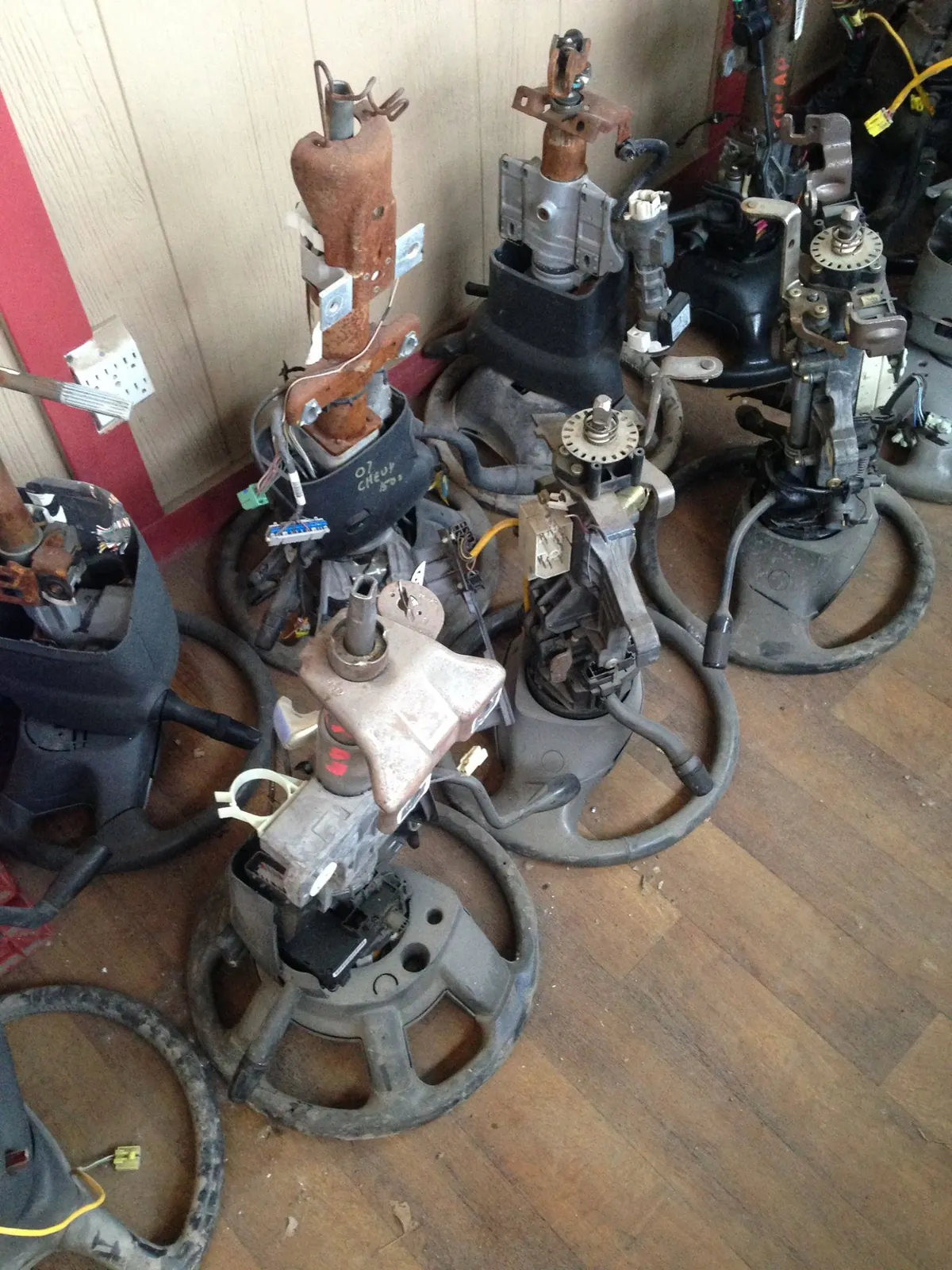
Want to see how a full-service yard works before you commit to wrenching? The New Country Auto Parts is open Monday–Friday 8–5 and Saturday 9–2 on the south side of Indianapolis. Plan your visit →
How Do You Find the Right Vehicle in the Yard?
Good yards organize their lots so you’re not wandering. At TNCAP, vehicles are grouped by make and model — ask at the front desk and staff will point you to the right row. Self-service chains work the same way, usually with row maps posted at the entrance.
Once you find a candidate donor car, slow down and inspect it before you open the toolbox:
- Check for fire and flood damage. Melted wiring, a burnt smell, or a waterline of silt inside the doors means walk away — electrical parts from those cars are gambles.
- See how picked-over it is. A car that’s been on the lot for weeks may be missing the brackets and hardware around your part, even if the part itself is there.
- Look for the cause of death. A rear-ended car is a great engine donor. A car with a blown motor is a great body-panel donor. Match the crash to the part.
- Find a second donor if you can. If the yard has two or three matching vehicles, compare condition and pull from the best one. This is where fresh, high-turnover inventory earns its keep.

One thing you don’t have to worry about at a professional yard: fluids and hazards. Indiana regulates how salvage yards handle oil, coolant, refrigerant, and mercury switches (Indiana Department of Environmental Management), and at our yard every vehicle is drained of fluids and stripped of hazardous materials before it’s placed. The industry as a whole is better at this than most people assume — professional auto recyclers process more than 4 million vehicles a year in the U.S. and Canada, and roughly 86% of a vehicle’s material content is recycled, reused, or used for energy recovery (Automotive Recyclers Association).
That reuse mindset is the whole culture of this industry. As Jonathan Morrow, a third-generation auto recycler at M&M Auto Parts in Virginia, put it in an NPR feature on salvage yards (NPR, 2025): “I like finding what other people deem to be trash and creating treasure with it.” That’s the job. Your junkyard pull is one working part finding its way into another vehicle.
How to Pull Parts from a Junkyard Without Breaking Them
Here’s the removal process that separates a clean pull from a broken part and a wasted trip:
- Photograph everything before you start. Wiring routing, hose positions, bolt locations, the part’s condition. Your phone is the best tool you brought.
- Soak rusty fasteners with penetrating oil first, then give it ten minutes to work while you plan the rest of the job.
- Start with the connectors, not the bolts. Unplug wiring harnesses and hoses gently — most connectors have a release tab that breaks if you force it. A skinny flathead helps on buried clips.
- Support the part before the last bolt comes out. Doors, hoods, and seats drop fast and bend where they land.
- Wiggle before you pull. If it doesn’t move freely, there’s a hidden fastener, clip, or bracket you missed. Find it — don’t fight it.
- Test electrical parts at the car. A 12V jump pack tells you in seconds whether a blower motor, window motor, or fan actually runs. No test, no purchase.
- Take all the hardware. Bolts, brackets, clips, and the wiring pigtail. Buying a missing pigtail separately later can cost more than the part did.
- Bag and label as you go. Future-you, reinstalling this part on a Saturday, will be grateful.
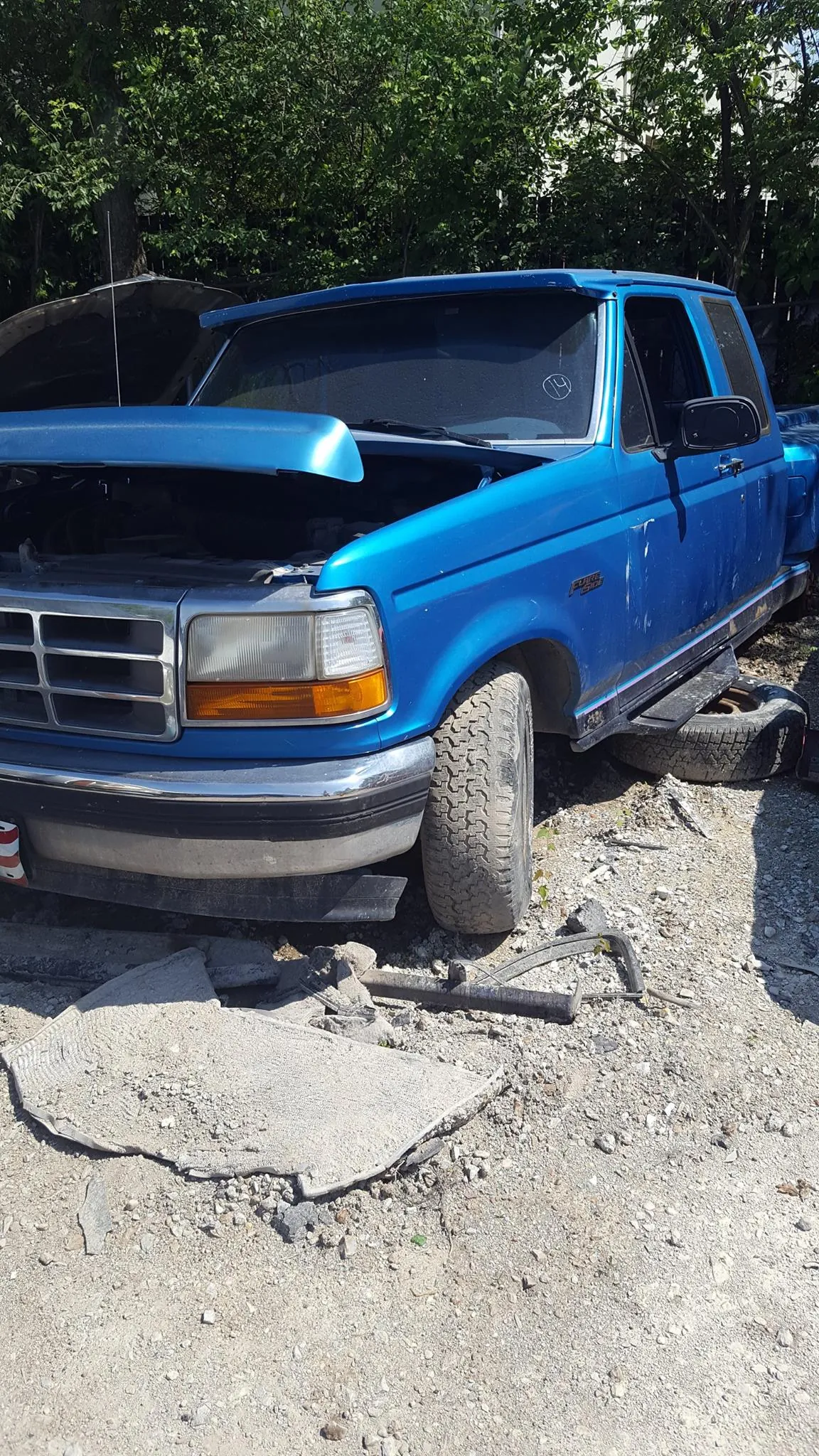
Work at your own pace. The most common beginner injury isn’t dramatic — it’s a sliced hand from rushing a stuck bolt next to a torn fender edge.
Junkyard Safety Tips Every Beginner Should Follow
Most of these are common sense; all of them get ignored by somebody every week.
- Never get under a car supported by only a jack. At most self-service yards, cars sit on wheels or stands. If a part requires getting underneath, ask staff how the yard handles it — or let a part-puller take the job.
- Stay away from airbags and seatbelt pretensioners. The yellow SRS connectors are your warning label. These are one-time-use explosive devices, and they’re on the list of parts you shouldn’t buy used anyway.
- Don’t open fuel lines. Depressurize or leave them alone.
- Watch for sharp edges constantly. Torn sheet metal, broken glass, and rusted brackets are everywhere you want to put your hand.
- Bring water in the summer. An Indiana yard in July is brutal, and heat does more damage than any tool ever will.
- Leave kids and pets at home. At our yard, no one under 18 is allowed in, period. That’s for their safety, and most yards have the same rule.
- Lift with your legs and get help on heavy parts. Engines, transmissions, and axles are two-person, equipment-assisted jobs — yards have carts and hoists for a reason.
What If You Don’t Want to Pull the Part Yourself?
Here’s the honest part: pulling junkyard parts yourself is cheap and satisfying, and it still isn’t for everyone. Everything above assumes you want to do the work. Plenty of people don’t — no tools, no time, bad back, or a part that’s buried deep in the engine bay. That’s exactly why The New Country Auto Parts runs a full-service model. Tell the counter what you need, and part-pullers on staff do the removal while you stay clean.
| What it takes | Self-service yard | Full-service yard (like TNCAP) |
|---|---|---|
| Who removes the part | You, with your own tools | Part-pullers on staff |
| Tools required | Full kit — sockets, wrenches, breaker bar | None |
| Time on site | 1–4 hours depending on the part | As long as the counter visit takes |
| Risk of breaking the part | On you | On experienced staff |
| Warranty | Varies by yard | 30-day warranty on all parts at TNCAP |
| Dirt factor | High — bring old clothes | Zero |
A few TNCAP specifics worth knowing before you come in:
- Every part carries a 30-day warranty — and the service warranty includes a free tow within Indy city limits plus free removal and replacement of the affected part during the warranty period.
- Core charges apply to major components like engines, transmissions, alternators, and radiators. You get the charge back when you return your old part — within 5 days, or the warranty is void.
- Payment: Visa, Mastercard, Amex, and cash.
- Parts are first-come, first-served. We can’t pull and set aside parts before you arrive, and holds require an approved down payment. If you want it, come get it.
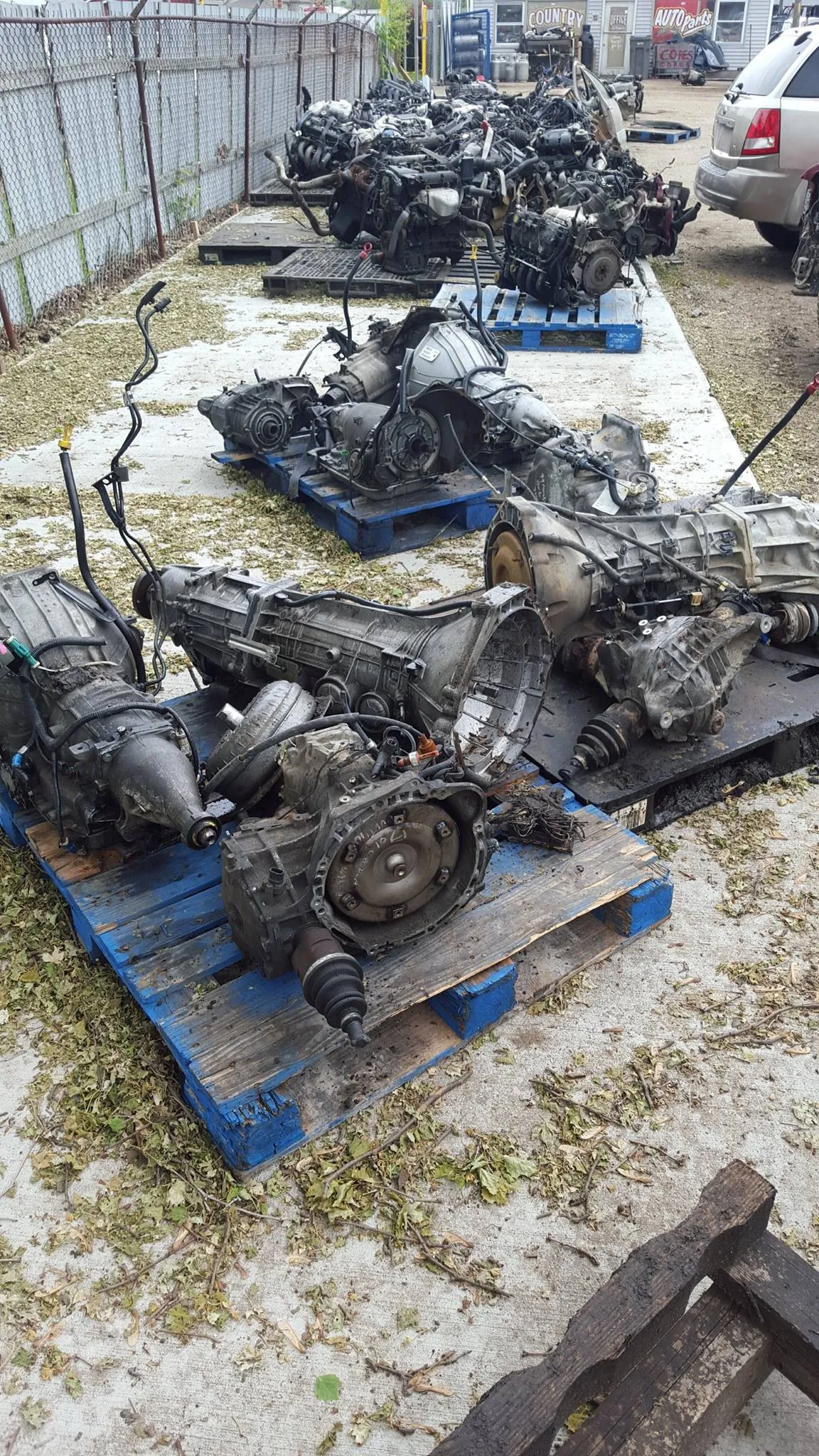
And if the vehicle you’ve been pulling parts from is your own driveway project that’s never getting finished — our sister brand Cash Car Heroes pays cash for cars in any condition with free towing across Central Indiana, from Indianapolis and Greenwood down to Franklin.
Need a part pulled this week? Call The New Country Auto Parts at (317) 787-7555 with your year, make, model, and part — we’ll check the yard and our part-pullers will handle the removal. Browse our parts services →
Common Beginner Mistakes (Learn from Other People’s Bad Days)
Most junkyard tips for beginners cover what to do. These are the ones about what not to do — and we’ve watched every one of them play out at our counter.
- Buying the wrong interchange. A part that “looks right” isn’t the same as a part that fits. Verify before you pull, not after.
- Leaving the hardware behind. The number one rookie move. The bracket you left on the donor car is the one piece the parts store doesn’t sell.
- Pulling wear items. Brake pads, belts, filters — some parts should always be bought new. Our list of car parts you should never buy used covers exactly which is which.
- Skipping the electrical test. Ten seconds with a jump pack beats a return trip. At TNCAP, returns on non-defective parts carry a restocking fee — test first.
- Showing up an hour before close. A transmission pull is not a 45-minute job. Come early; we’re open Monday-Friday 8-5 and Saturday 9-2, closed Sunday.
- Prying plastic trim in cold weather. Cold plastic snaps. If the part is trim-heavy, pick a warmer day or let a part-puller with the right tools handle it.
If this is your first used-parts purchase entirely, start with our complete guide to buying used auto parts — it covers where to buy, what to inspect, and how the pricing works, and it pairs with this guide. For the fuller comparison of doing it yourself versus having staff pull it, plan a visit and see the full-service difference in person.
Frequently Asked Questions
What tools should I bring to a junkyard?
Bring a SAE and metric socket set with extensions, combination wrenches, flathead and Phillips screwdrivers, a Torx set, pliers, wire cutters, a breaker bar, penetrating oil, zip-lock bags for hardware, and a 12V jump pack for testing electrical parts. Call ahead before bringing power tools — most yards ban torches, grinders, and jacks.
Do junkyards pull parts for you?
Full-service yards do. The New Country Auto Parts in Indianapolis keeps part-pullers on staff who remove the part for you — no tools, no dirt, no risk of breaking it. Self-service chains like pull-and-pay yards require you to bring tools and do the removal yourself, usually in exchange for lower entry pricing.
What should I wear to a junkyard?
Closed-toe shoes or boots (required at most yards), long pants, old clothes you can ruin, cut-resistant work gloves, and safety glasses. At The New Country Auto Parts, a safety vest is also required before entering the yard. Avoid sandals, shorts, and loose clothing — yards will turn you away at the gate for open-toed shoes.
Can you test used parts before buying them?
Electrical parts, yes — bring a 12V jump pack or multimeter and test blower motors, window motors, and fans right at the donor car. Mechanical parts like engines can’t be fully tested in the yard, which is why warranty matters: TNCAP backs all parts with a 30-day warranty, including free removal and replacement service.
Do junkyard parts come with a warranty?
It varies by yard, so always ask. At The New Country Auto Parts, every part carries a 30-day warranty, and the service warranty adds a free tow within Indianapolis city limits plus free removal and replacement of the affected part. Core parts like engines and transmissions require returning your old unit within 5 days.
How do I know a junkyard part will fit my car?
Match the part number from your old part, then ask the counter about interchange — the same part often fits multiple models and years. Bring your vehicle’s year, make, model, engine size, and trim when you call. When in doubt, bring the old part with you and compare them side by side before you buy.
Can I bring my kids to the junkyard?
No. Nearly every salvage yard, including The New Country Auto Parts, prohibits anyone under 18 in the yard — it’s an active work site with sharp metal, uneven ground, and moving equipment. Plan to leave kids and pets at home, and expect to check in at the front desk before entering any yard.
Ready to find your part? Hundreds of vehicles, fresh inventory added daily, and a 30-day warranty on every part — pulled for you by our staff. Call (317) 787-7555 or get in touch →