When a vehicle rolls into our yard, we don’t see junk — we see an inventory. Every junk car is a shelf of parts waiting to go back on the road, and a few of those parts are worth more than the entire scrap weight of the car combined. This is the order we evaluate them in and roughly what each is worth, from the people who pull and sell them every day at the counter.
Last updated: June 2026
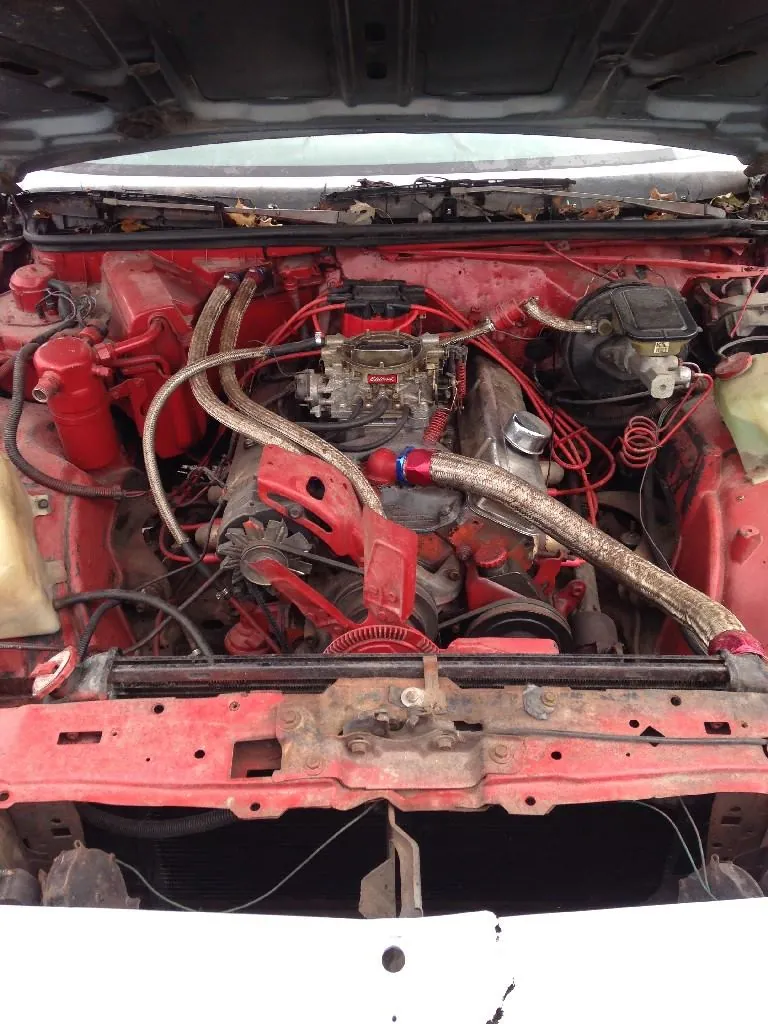
A quick note on the numbers below: these are typical used resale ranges at a full-service Indianapolis yard, the same figures in our used auto parts price guide. What a part actually brings depends on the vehicle, the part’s condition, and how many people are searching for it that week. Common domestic parts move fast; niche imports command more but sit longer. Here’s the ranking.
Most Valuable Junk Car Parts at a Glance
| Part | Typical used value | How fast it sells |
|---|---|---|
| Engine (complete) | $300 – $2,500 | Moderate; fast for popular platforms |
| Transmission | $150 – $1,500 | Moderate |
| Catalytic converter | $50 – $250+ (precious-metal scrap) | Sold as material, not road part |
| Wheels / rims (each) | $15 – $200 | Fast for OEM alloy sets |
| Door assembly | $75 – $400 | Moderate; color-dependent |
| Fender / hood / bumper | $50 – $300 each | Moderate |
| Headlight assembly | $30 – $250 | Fast |
| Taillight (each) | $25 – $100 | Fast |
| A/C compressor | $40 – $200 | Seasonal |
| Alternator | $30 – $100 | Fast |
| Starter | $25 – $80 | Fast |
| Radiator | $40 – $150 | Steady |
| Seat | $30 – $300 | Moderate |
The full ranking, with the why behind each, follows.
1. The Engine — $300 to $2,500
The single most valuable part on most junk cars. A complete, running engine ranges from about $300 for a common four-cylinder to $2,500 for a low-mileage V8 or a high-demand motor. Engines from popular, reliable platforms — Honda and Toyota four-cylinders, the GM and Ford V8s in trucks — sell quickly because the demand pool is huge. Mileage and a known-good compression test are what move an engine from the low end to the high end. This is why a car that “doesn’t run” but has a good engine is still worth real money.
2. The Transmission — $150 to $1,500
Right behind the engine. A used transmission runs $150 to $1,500, with automatics and 4x4 units at the top of the range. Transmissions are heavy, in constant demand (they’re an expensive failure for any driver), and a tested unit with a warranty is far cheaper than a rebuild — so they don’t sit long. 4x4 transfer cases add another $75 to $300 on trucks and SUVs.
3. The Catalytic Converter — $50 to $250+ (and why it gets stolen)
Here’s the one people misunderstand. We don’t sell used catalytic converters for road use — they’re federally regulated and generally can’t be reinstalled. Their value is in the precious metals inside (platinum, palladium, rhodium), which is why a converter is worth $50 to $250 or more as recovered material and why converter theft is rampant. For you as a seller, this matters in reverse: if your converter has already been stolen or cut off, expect the offer to drop by roughly the converter’s value, because that value is gone.
4. Wheels & Rims — $15 to $200 each
A clean set of factory alloy wheels is one of the fastest-selling items on the shelf. Steel wheels are cheap ($15 and up), but OEM alloy rims run up to $200 each, and a matched set of four in a popular size and finish can be the most valuable thing on an otherwise tired car. Curb rash, bends, and corrosion are what knock the price down.
5. Doors & Body Panels — $50 to $400
Collision shops and DIYers keep these moving. A complete door assembly runs $75 to $400 (power windows, mirrors, and side airbags push it up), while fenders, hoods, and bumper assemblies each land around $50 to $300. The catch with body panels is color: a panel in a common factory color sells; an oddball color can sit for months waiting for the exact right car.
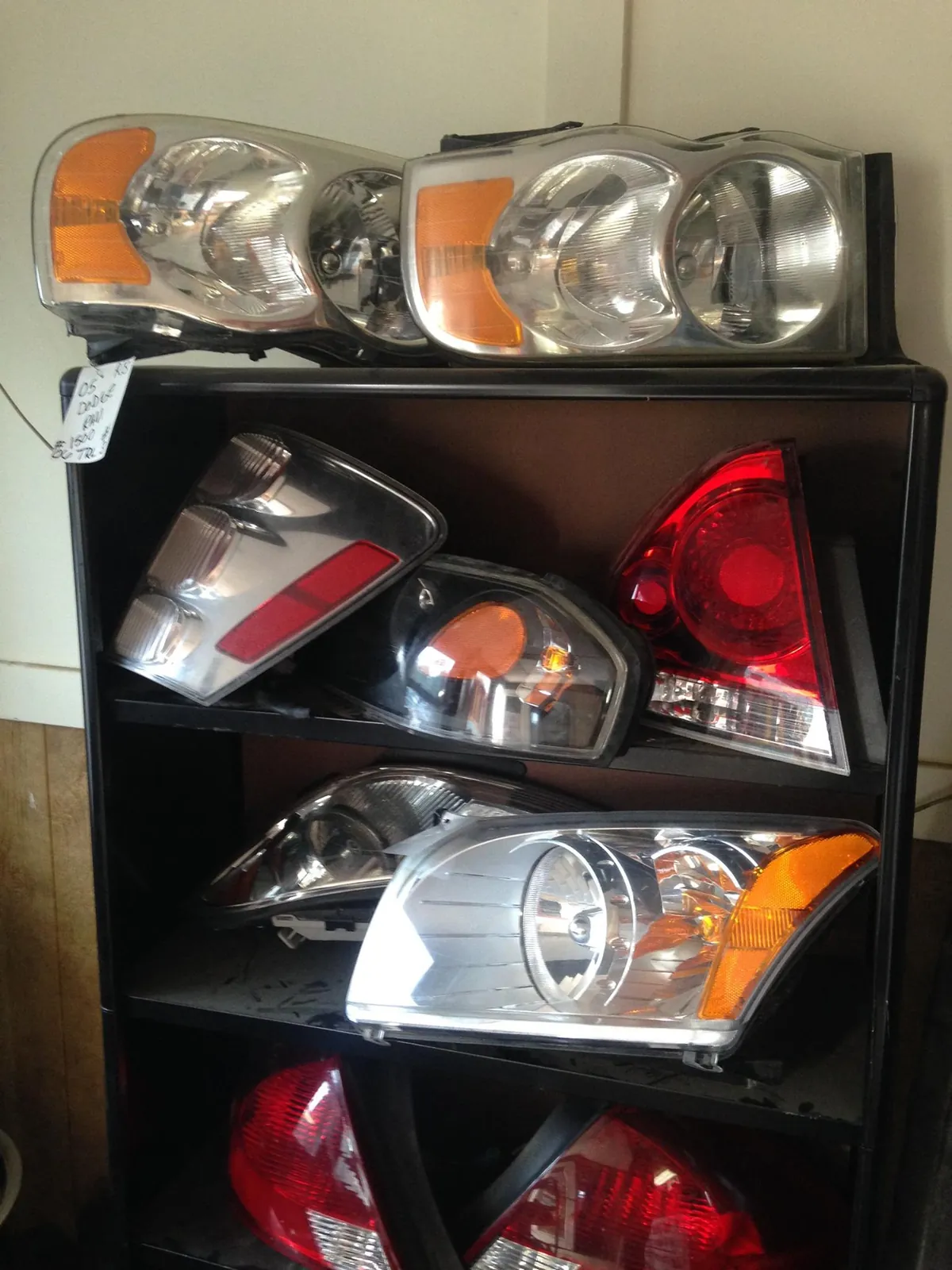
6. Headlights & Taillights — $25 to $250
Lighting is high-demand, low-effort to pull, and one of the most-requested items at our counter. A headlight assembly runs $30 to $250 (LED and HID units command the high end), and taillights go for $25 to $100 each. Modern projector and LED assemblies are expensive new, so the used market for them is strong.
7. The A/C Compressor — $40 to $200
An air-conditioning compressor is a pricey repair when it fails, so the used unit moves well in spring and summer at $40 to $200. A core charge may apply. Demand is seasonal but reliable.
8. Alternator & Starter — the fast nickel
Neither is a big-ticket item — an alternator is $30 to $100, a starter $25 to $80 — but they’re two of the quickest sales in the building. They’re common failure points, every driver needs one eventually, and a tested unit with a warranty beats buying new. We pull and shelf these knowing they’ll turn over fast, especially for high-volume vehicles like Civics, Camrys, Silverados, and F-150s.
9. Radiator & Cooling — $40 to $150
A radiator runs $40 to $150 depending on size and whether the fan assembly comes with it. Steady, unglamorous demand — cooling parts fail, and the used ones are a big savings over new.
10. Electronics, Airbags & Interior
The modern junk car carries real money in its electronics. Infotainment and navigation head units, body control modules, and intact airbag systems are all in demand, and on newer vehicles they can rival the mechanical parts — though pricing varies widely by make and model and some safety components are sold only where legal and properly handled. Seats round it out at $30 to $300, with leather, powered, and heated seats at the top.
The Small Parts That Add Up
None of these will make your car valuable on their own, but a full-service yard sells them all day and they add to what a complete car is worth: side mirrors ($20 to $100, more for power, heated, or signal-integrated units), window regulators ($20 to $75), control arms and suspension pieces ($20 to $75 each), wheel hubs and bearings ($15 to $75), and the battery (a modest $20 to $50 with a core). Multiply these across a whole vehicle and the “leftovers” after the big parts still represent real inventory — one more reason the parts add up to more than scrap.
What Sells Fast vs. What Sits
The biggest factor isn’t on any price chart — it’s demand. Parts for high-volume vehicles (Honda Civic and Accord, Toyota Camry and Corolla, Ford F-150, Chevy Silverado) sell within days because there are millions of them on the road needing parts. Niche and European parts (BMW, Audi, low-volume trims) command higher prices but can sit on the shelf for months waiting for the one buyer who needs them. Condition is the other lever: tested, complete, low-mileage parts move; cracked, corroded, or incomplete ones get passed over. At the counter, the everyday requests are alternators, starters, mirrors, lights, and wheels — the cheap, common failures.
How We Decide What to Pull First
The order isn’t random. When a car comes in, we triage it by value times demand. The high-dollar drivetrain — engine and transmission — gets tested and cataloged first, because that’s where most of the money is and a buyer may already be waiting. Next come the fast movers: wheels, lights, mirrors, alternators, and starters, the parts people walk in asking for every day. Body panels are pulled and inventoried by color and fitment. Anything fragile or theft-prone (electronics, the converter) is handled carefully and tracked. Only once the in-demand parts are off does the remaining shell go to scrap for its metal weight. A part nobody’s searching for has little value sitting on a shelf no matter how “expensive” it was new — demand is what turns a part into cash, and it drives the whole order of operations.
Why This Matters If You’re Selling
This is the whole reason a full-service yard pays more than a scrap-only buyer. We’re not weighing your car — we’re valuing its parts inventory, and the engine, transmission, and a clean set of wheels alone can be worth more than the metal. It’s also why condition details matter when you sell: a good engine, an intact converter, and undamaged body panels all push your offer up. If you’re selling, our buying arm Cash Car Heroes prices these parts into the offer — see how a yard builds that number and your three options for selling.
If you’re on the other side of the counter — buying instead of selling — browse our parts, check the used parts buying guide, or call the counter at (317) 787-7555. We’re a full-service yard at 3013 Stanley Avenue, open Monday-Friday 8 AM-5 PM and Saturday 9 AM-2 PM, and our staff pulls the part for you.
Frequently Asked Questions
What is the most valuable part on a junk car?
The engine, on most vehicles — a complete used engine runs about $300 to $2,500 depending on the vehicle, far more than the car’s scrap weight. The transmission is second ($150 to $1,500). The catalytic converter is also valuable, but for the precious metals inside it ($50 to $250+) rather than as a reusable part.
How much is a catalytic converter worth?
A catalytic converter is typically worth $50 to $250 or more for the platinum, palladium, and rhodium it contains. It’s valued as recovered material, not as a reusable road part — used converters are federally regulated and generally can’t be reinstalled. That precious-metal value is why converter theft is so common.
What car parts sell the fastest at a salvage yard?
Common wear-and-failure parts for high-volume vehicles — alternators, starters, mirrors, headlights, taillights, and wheels for Hondas, Toyotas, F-150s, and Silverados — sell within days. Engines and transmissions are higher-value but turn a bit slower, and niche or European parts can sit for months while commanding premium prices.
Should I part out my junk car or sell it whole?
Parting out can net more if you have the time, tools, and in-demand parts, but it’s weeks of work and you still have to scrap the shell. Selling whole to a full-service yard captures the parts value instantly because the yard prices those parts into the offer. Our guide to selling a junk car: your 3 options breaks down the trade-offs.
Does a missing catalytic converter lower what I get for my car?
Yes. Because the converter carries real value in its precious metals, a car that’s missing its converter — stolen or cut off — will get a lower offer, reduced by roughly what that converter was worth. The rest of the car still has parts and metal value, so it’s still a sale.