The easiest car repairs to do with junkyard parts are the bolt-on swaps: side mirrors, headlight assemblies, door handles, interior trim, window regulators, alternators, battery trays, fuse box covers, glove boxes, and factory radios. Most take under an hour with basic hand tools, and the used part costs a fraction of the new price.
Last updated: September 2026
Here’s the math that makes these DIY car repair tips worth your Saturday. Shop labor in Indiana averages $123 an hour (Tekmetric, 2026), repair prices overall rose 6.6% in the year to July 2026 (U.S. Bureau of Labor Statistics, 2026), and the average American vehicle is now 12.8 years old (S&P Global Mobility, 2025) — old enough that something plastic or electrical is breaking on it right now. “Older cars mean more maintenance activity, but the cost of that maintenance can add up fast, leading consumers to find ways to save, including taking on some of it themselves,” says Nathan Shipley, automotive industry analyst at Circana (2025).
We watch that play out every day at The New Country Auto Parts, the salvage yard at 3013 Stanley Ave on the south side of Indianapolis. The customers who save the most aren’t master mechanics. They’re regular people who figured out that a mirror, a handle, or an alternator is just a few bolts — and that the used part costs a fraction of what the dealer wants for a new one.
So here are the ten repairs we’d hand a beginner, each with a difficulty rating out of 5, the tools you need, the time it really takes, and what the part runs at our counter. One honest note before we start: we sell parts, we don’t install them. The steps below are the standard pattern for most vehicles, but your exact model may differ — pull up a video for your year, make, and model before you touch a bolt.
What DIY Car Repairs Can You Do With Junkyard Parts?
All ten at a glance, easiest tools first:
| Repair | Difficulty | Time | Used price at our counter |
|---|---|---|---|
| 1. Side mirror | 1/5 | 15–30 min | $20 – $100 |
| 2. Headlight assembly | 2/5 | 30–45 min | $30 – $250 |
| 3. Door handle | 2/5 | 45–90 min | Call for price |
| 4. Interior trim | 1/5 | Minutes per piece | Call for price |
| 5. Window regulator | 3/5 | 1–2 hours | $20 – $75 |
| 6. Alternator | 3/5 | 45–90 min | $30 – $100 |
| 7. Battery tray | 1/5 | 20–30 min | Call for price |
| 8. Fuse box cover | 1/5 | 1 minute | Call for price |
| 9. Glove box | 1/5 | 15–20 min | Call for price |
| 10. Factory radio | 2/5 | 30–60 min | Call for price |
Prices with ranges come from our own used auto parts price guide; the smaller items vary too much by vehicle to publish a range, so call (317) 787-7555 with your year, make, and model and we’ll quote it while you’re on the phone.
Before You Start: DIY Car Repair Tips That Apply to Every Job
Nhu Nguyen, a Red Seal Certified Automotive Technician at Pfaff Tuning, boils successful DIY down to four things — the correct parts, the right tools, good service information, and a place to work. “If you’re missing any of those, you’re not going to have a good time,” she told Family Handyman (2024).
The “correct parts” half is where a salvage yard either saves you money or wastes your afternoon, so get the fitment right. Match year, make, model, and trim — and for anything electrical, the exact option package. Bring the old part with you if you can. Our guide to buying used auto parts covers how to confirm a match before you pay.
For tools, a 3/8” socket set, a couple of screwdrivers, a plastic trim tool, and maybe a Torx bit set will handle everything on this list. And at The New Country Auto Parts you don’t even need them for the pulling half: our part-pullers find it in the yard and bring it to you, no tools and no crawling under a donor car, or you can pull it yourself and ask the front desk about the self-pull discount. If you go the self-pull route, read our step-by-step guide to pulling parts from a junkyard first.
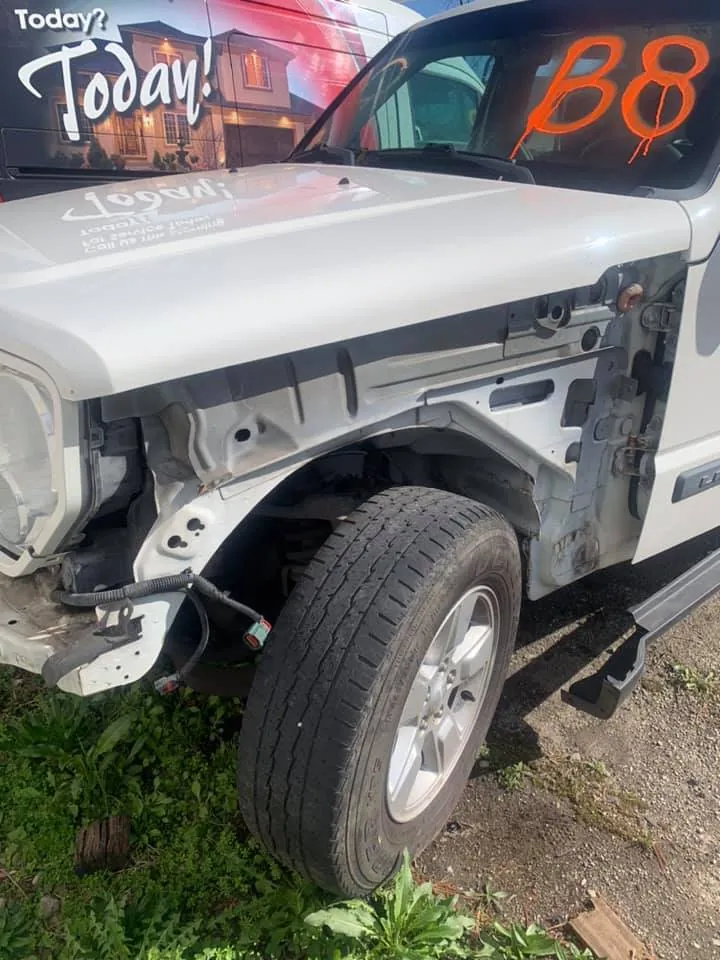
1. Replace a Broken Side Mirror
Difficulty: 1/5 | Time: 15-30 minutes | Tools: trim tool, socket set | Used price: $20-$100
The classic parking-garage casualty, and the repair that convinces most people DIY is real. A new mirror assembly from a dealer can run several hundred dollars on late-model vehicles; a used one off a donor car does the same job.
- Pop off the small triangular trim panel inside the door corner with a trim tool.
- Unplug the electrical connector if the mirror is powered or heated.
- Remove the three nuts or bolts holding the mirror to the door.
- Bolt on the used mirror, plug it in, and test power adjustment before you put the trim back.
Power, heated, and turn-signal mirrors sit at the top of that price range. If paint match matters to you, ask for a donor in your color — with hundreds of vehicles on the lot, there’s a decent chance we have one.
2. Swap a Headlight Assembly
Difficulty: 2/5 | Time: 30-45 minutes | Tools: socket set, screwdriver | Used price: $30-$250
Cracked lens, water inside the housing, or a hazy yellow glow that barely reaches the road — the fix is the whole assembly, not just a bulb. New assemblies are one of the ugliest line items in car repair, especially LED and HID units. Used is the sane route, and you can eyeball the donor lens for clarity before it leaves the yard.
- Open the hood and remove the retaining bolts on top of the assembly (a few models hide one behind the bumper cover or inner fender liner).
- Unplug the bulb connectors behind the housing.
- Pull the assembly forward and out.
- Install the used assembly, reconnect, and check your beam aim against a wall at dusk.
3. Fix a Broken Door Handle
Difficulty: 2/5 | Time: 45-90 minutes | Tools: socket set, trim tool, Torx bits on some models
An exterior handle that snaps off leaves you crawling across from the passenger side every morning. The part itself is small and cheap used — the work is mostly getting to it.
- Remove the interior door panel (screws hide in the armrest and behind small covers) and peel back the moisture barrier.
- Unclip the rod or cable connecting the handle to the latch.
- Unbolt the handle from outside or through the access hole and swap in the used one.
- Reconnect, test the latch a dozen times, then reseal the barrier and reinstall the panel.
Ask for a handle in your paint color, and if your key cylinder lives in the handle, transfer your own cylinder so your key still works.
4. Replace Cracked or Missing Interior Trim
Difficulty: 1/5 | Time: minutes per piece | Tools: trim tool, screwdriver
Kick panels, pillar covers, console lids, cup holder inserts, seat trim caps — the plastic bits that break first and cost absurd money new, when the dealer can get them at all on an older car. Most snap off and snap on with plastic clips. The whole job is matching color and texture: pull from a donor of the same generation and interior color, and buy a couple of spare clips while you’re at it. Our interior parts section is organized for exactly this kind of scavenger hunt.
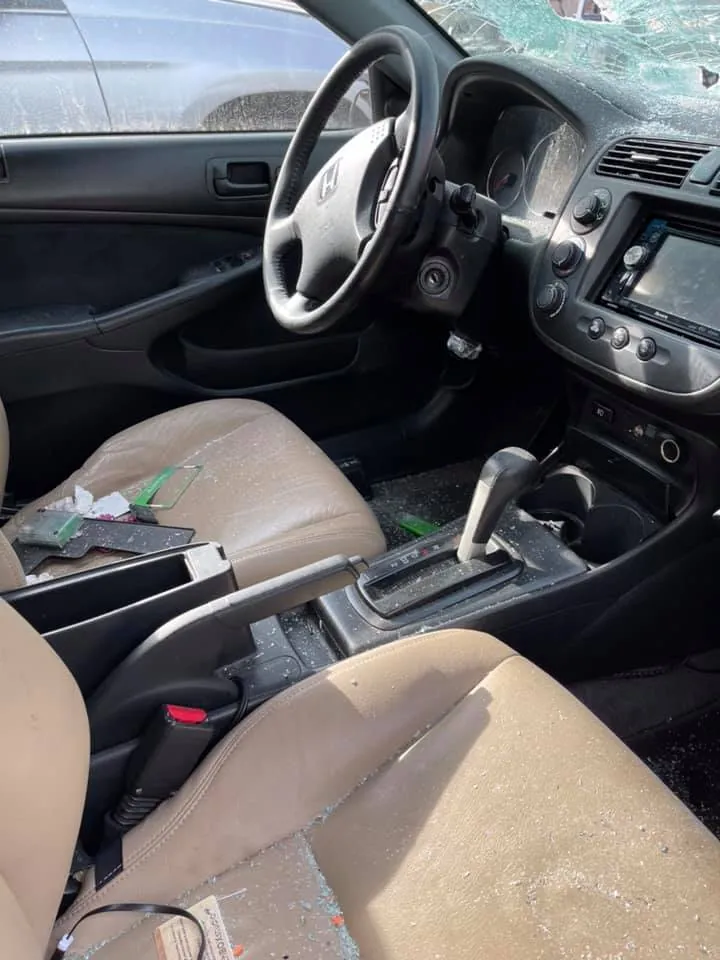
5. Replace a Failed Window Regulator
Difficulty: 3/5 | Time: 1-2 hours | Tools: socket set, trim tool, painter’s tape | Used price: $20-$75
The window that fell into the door with a clunk. This is the hardest repair on this list — honestly, if you’ve never held a trim tool, start with the glove box, not this — but it’s also one of the biggest savings, because a shop visit for a regulator means parts plus serious labor.
- Remove the door panel and moisture barrier.
- Tape the glass up to the door frame with painter’s tape so it can’t drop.
- Unbolt the regulator (and motor, if attached), unplug it, and feed it out through the access hole.
- Feed in the used regulator, bolt it down, attach the glass, and test the full range before reassembly.
Regulators run $20-$75 used, a bit more with the motor attached. Take a photo of the bolt layout before you remove anything — future you will be grateful.
Don't want to pull it yourself? Tell us the part and the vehicle, and our part-pullers will have it out of the donor car for you — no tools, no coveralls, no crawling around the yard. See how our used parts work →
6. Swap in a Used Alternator
Difficulty: 3/5 | Time: 45-90 minutes | Tools: socket set, breaker bar or serpentine belt tool | Used price: $30-$100
The battery light comes on, the car dies at a stoplight, and the quote lands somewhere painful: alternator replacement at a shop averages $747 to $842 (Kelley Blue Book, 2026). The used unit at our counter is $30 to $100 — the single best percentage save on this list, and our price guide has the rest.
- Disconnect the negative battery terminal first. Always.
- Release the belt tensioner and slip the serpentine belt off the alternator pulley.
- Unplug the wiring, remove the two or three mounting bolts, and lift the unit out.
- Bolt in the used alternator, route the belt exactly as the diagram under your hood shows, reconnect, and start it up. A healthy charging system reads around 14 volts.
Two notes. Alternators carry a core charge at purchase if you don’t bring your old one in — return it within 5 days and the core charge is refunded. And many parts stores will bench-test an alternator free, so you can confirm the swap fixed it. Browse our electrical parts or call for what’s in the yard today.
7. Replace a Rusted Battery Tray
Difficulty: 1/5 | Time: 20-30 minutes | Tools: socket set, wire brush, gloves
Years of battery acid turn the tray under your battery into lace, and then the battery starts shifting on bumps. Nobody thinks about this part until it fails — and almost nobody thinks to buy it used, even though every donor car in the yard has one.
- Disconnect and remove the battery (negative terminal first).
- Unbolt the old tray and brush the corrosion off the mounting area.
- Bolt in the donor tray and reinstall the battery, hold-down included.
Wear gloves — the white crust on a corroded tray is acid residue, and it does not care about your skin or your jeans.
8. Replace a Missing Fuse Box Cover
Difficulty: 1/5 | Time: 1 minute | Tools: none
The easiest repair in this article: it’s a lid. Covers vanish over the life of a car, and with them goes the fuse diagram printed on the underside — the thing you need at 10 p.m. when the radio fuse blows. Dealers charge real money for this piece of plastic when they stock it at all; on a discontinued model, the salvage yard is often the only place it exists. Walk in, name your vehicle, walk out. While you’re at it, grab the fuse puller that clips inside and a handful of spare fuses from the donor box.
9. Fix a Broken Glove Box
Difficulty: 1/5 | Time: 15-20 minutes | Tools: screwdriver
Snapped hinges, a latch that won’t stay shut, a lid hanging at half-mast. Rather than fighting a plastic repair that never holds, swap the whole box from a donor with the same interior color.
- Open the box and squeeze or unclip the side stops so it swings all the way down.
- Unhook the damper cord if there is one.
- Unscrew or unclip the hinges, then install the donor unit in reverse.
Check that the latch clicks and the donor lid matches your dash color before you leave the yard — that’s a ten-second check that saves a second trip.
10. Swap a Factory Radio
Difficulty: 2/5 | Time: 30-60 minutes | Tools: trim tool, screwdriver or radio removal keys
A dead display or silent speakers doesn’t have to mean an aftermarket head unit that looks wrong in the dash. A factory radio from the same model plugs straight into your existing harness — no wiring adapters, no dash kit.
- Pry off the trim bezel around the radio with a trim tool.
- Remove the mounting screws (some makes use slide-in removal keys instead).
- Slide the unit out, unplug the harness and antenna lead, and plug in the donor radio.
- Test every function before you snap the bezel back on.
One caveat: some factory radios have an anti-theft lock that asks for a security code when power is disconnected. Check whether your make does this before you buy, and test the donor unit at the yard if possible.
How to Get These Parts in Indianapolis
Every repair above starts the same way: get the right part cheap. At The New Country Auto Parts, that works whichever way you prefer. Search our inventory online or call (317) 787-7555 and we’ll check the yard while you’re on the phone. Then either let our part-pullers pull the part for you — the full-service model that separates us from the self-service yards in town — or pull it yourself and ask about the self-pull discount at the desk.
Parts carry a 30-day warranty unless sold as-is: defective parts get replaced, or you get store credit for what you paid if we no longer have one. The warranty covers the part itself, not labor, and the install is on you — which, for the ten repairs above, is exactly the point. We’re at 3013 Stanley Ave on the south side, near Madison and Troy, Monday-Friday 8-5 and Saturday 9-2, and Indianapolis drivers have rated the experience 4.8 stars across 320+ Google reviews.

Have a part in mind? Call (317) 787-7555 with your year, make, and model — we’ll check availability and quote the price while you’re on the phone. Get in touch →
The Parts You Should Not Buy Used
Junkyard parts aren’t the answer for everything, and pretending otherwise would cost you our credibility. Skip used for wear items and safety parts: brake pads and rotors, tires, belts and hoses, filters, spark plugs, timing belts, gaskets — and treat airbags and seatbelts as new-only. The full reasoning is in our guide to car parts you should never buy used. The ten repairs in this article all involve the opposite category: solid, non-wear parts that either work or visibly don’t.
And if the repair bill on your car keeps climbing past what the car is worth, the smarter move might not be a repair at all — our guide to saving money on car repairs in Indianapolis walks through that whole decision, including when to sell instead.
Frequently Asked Questions
Is it worth buying car parts from a junkyard?
For non-wear parts, yes. A used OEM part was built by the same manufacturer to the same spec as the new one, and recycled parts typically cost less than new OEM parts (Automotive Recyclers Association). At our counter, a used alternator runs $30-$100, against an average shop replacement of $747 to $842 installed (Kelley Blue Book, 2026). Wear items like brakes and belts should be bought new.
What car repairs can a beginner do with junkyard parts?
Start with the true bolt-ons: side mirror, fuse box cover, glove box, interior trim, and battery tray. Each takes 30 minutes or less with a screwdriver, a socket set, and a trim tool. Headlight assemblies, door handles, and factory radios are the next step up. Save window regulators and alternators for your third or fourth project.
How do I make sure a junkyard part fits my car?
Match year, make, model, and trim — and for electrical parts, the exact option package, since a heated mirror and a basic mirror are different parts. Bring the old part with you to compare side by side. At The New Country Auto Parts you can search inventory online or call (317) 787-7555 to confirm before you drive over.
Do junkyard parts come with a warranty?
At The New Country Auto Parts, parts carry a 30-day warranty unless sold as-is. Defective parts are replaced with the same part, or you receive store credit for what you paid if it’s no longer in stock. The warranty covers the part itself — installation and transportation are the customer’s responsibility, and some parts carry a refundable core charge.
What tools do I need for these repairs?
A 3/8” socket set, flat and Phillips screwdrivers, a plastic trim tool, and a Torx bit set cover all ten repairs, plus painter’s tape for the window regulator. Total outlay is well under one hour of Indiana’s average $123-per-hour shop labor rate (Tekmetric, 2026). At a full-service yard, the pulling itself requires no tools at all — staff do it for you.
Which car parts should you never buy used?
Wear items and safety parts: brake pads, rotors, tires, belts, hoses, filters, spark plugs, clutch kits, timing belts, and gaskets. Rubber ages and consumables are spent from day one. Airbags and seatbelts are single-use safety devices — buy new. Solid parts like mirrors, glass, trim, and body panels are the safe used-buy category.
How much money do DIY repairs actually save?
Two ways at once. You skip shop labor — $123 an hour on average in Indiana, and $132 nationally (Tekmetric, 2026) — and you cut the parts bill by buying used. Shop alternator replacement averages $747 to $842 (Kelley Blue Book, 2026); the used alternator at our counter is $30 to $100 plus an hour of your Saturday.
The Bottom Line
DIY car repair isn’t about becoming a mechanic. It’s about recognizing which ten or fifteen jobs on a modern car are just bolts, clips, and a plug — and refusing to pay $123 an hour for those. Pair that with a salvage yard that pulls the part for you, backs it for 30 days, and quotes prices over the phone, and an aging car stops being a money pit and starts being cheap transportation.
The New Country Auto Parts is at 3013 Stanley Ave, Indianapolis — hundreds of vehicles, all makes and models, fresh inventory daily, part-pullers on staff. Plan your visit, or call (317) 787-7555 and tell us what broke.